Menu
Home
Post Something
Forums
Current Activity
New posts
Search forums
What's new
New posts
Latest activity
News & Features
The Marketplace
Cars for Sale
Engine and Performance
Chassis and Wheels
Exterior and Body
Interior and Cockpit
ICE - In Car Entertainment
Car Shops and Services
Toys and Wares
All Other Stuff
Jobs and Vacancies
Looking For
Members
Log in
Register
What's new
Search
Search
Search titles only
By:
Current Activity
New posts
Search forums
Menu
Log in
Register
Reply to thread
See what others are reading now! Try Forums >
Current Activity
Home
Forums
Main Forums
General Talk
Groups and Meets
JB New Section........ Part 4.....
JavaScript is disabled. For a better experience, please enable JavaScript in your browser before proceeding.
You are using an out of date browser. It may not display this or other websites correctly.
You should upgrade or use an
alternative browser
.
Message
<blockquote data-quote="normality78" data-source="post: 3996624" data-attributes="member: 17"><p>Comments(5) | Add Yours Print E-Mail Share This Skype GlossaryIs Wikipedia Reliable?</p><p>The creators of Wikipedia are the first to admit that not every entry is accurate and that it might not be the best source of material for research papers. Here are some points to consider: </p><p></p><p>•Look for a slant. Some articles are fair and balanced, but others look more like the Leaning Tower of Pisa. If an article has only one source, beware.</p><p>•Consider the source. Even if an article cites external sources, check out those sources to see whether they are being cited fairly and accurately — and do, in fact, reinforce the article's points.</p><p>•Look who's talking. If you research the contributors themselves and find that they are experts in their fields, you can be more confident in the entry.</p><p>•Start here, but keep going. Wikipedia should be a starting point for research but not your primary source for research material.</p><p>In December 2005, the scientific journal Nature published the results of a study comparing the accuracy of Wikipedia and the printed Encyclopaedia Britannica. The researchers found that the number of "factual errors, omissions or misleading statements" in each reference work was not so different — Wikipedia contained 162, and Britannica had 123. The makers of Britannica have since called on Nature to retract the study, which it claims is "completely without merit."</p><p></p><p>When visiting controversial entries, look out for edit wars. Edit wars occur when two contributors (or groups of contributors) repeatedly edit one another's work based on a particular bias. In early 2004, Wikipedia's founders organized an Arbitration Committee to settle such disputes.</p><p>Wikipedia does have some weaknesses that more traditional encyclopedias do not. For example</p><p></p><p>•There is no guarantee that important subjects are included or given the treatment that they deserve.</p><p>•Entries can be incomplete or in the middle of being updated at any given time.</p><p>•The writers of entries often fail to cite their original sources, thus making it hard to determine the credibility of the material.</p><p>These issues should not deter you from using Wikipedia. Just weigh the limitations of Wikipedia — and, for that matter, reference works in general.</p><p></p><p><span style="color: silver"><span style="font-size: 9px">---------- Post added at 11:32 AM ---------- Previous post was at 11:29 AM ----------</span></span></p><p></p><p>I decided to spend a little time with a few Wikipedia pages today to see what I could discover about the accuracy, usability, and quality of the information available there. After all, the Wikipedia entry for a lot of search terms in Google, Yahoo, and other search engines is usually in the top 5 or so results. A lot of people are using Wikipedia: reading it… doing homework with it… writing research papers… or business presentations… etc. It'd be nice to know if that information is reliable or not.</p><p></p><p>For my little test I chose three Wikipedia pages:</p><p></p><p>•The Iraq War (a current, still-changing event) </p><p></p><p>The majority of the article contains a detailed time line of events from pre-war Iraq to the present. I actually read all 33 pages of that time line, too. Here are a few things I didn't like:</p><p></p><p>•The quality of the writing is not top-notch. In fact, obvious misspellings, missing words, and grammatical errors abound. </p><p>•Several pieces of the entry stated as fact have no reference link to show where the information came from. Luckily, most of them are flagged as missing a reference. But to the casual reader or student, that could easily be missed. And if it's wrong, there's no where to go to find out where the information came from. </p><p>•Several parts of the entry are written with an obviously biased perspective.</p><p></p><p>Overall, the entry is questionable. It looks complete and it covers a lot of information. But the validity and the accuracy of some of it is questionable. To the trained, objective eye that makes the validity of the entire entry questionable. If you can ignore the grammar, the post is written well enough that most people could follow along. But is it encyclopedia-level writing? Not at all. Would I use this entry to write a report, a presentation, or as a trusted source? No.</p></blockquote><p></p>
[QUOTE="normality78, post: 3996624, member: 17"] Comments(5) | Add Yours Print E-Mail Share This Skype GlossaryIs Wikipedia Reliable? The creators of Wikipedia are the first to admit that not every entry is accurate and that it might not be the best source of material for research papers. Here are some points to consider: •Look for a slant. Some articles are fair and balanced, but others look more like the Leaning Tower of Pisa. If an article has only one source, beware. •Consider the source. Even if an article cites external sources, check out those sources to see whether they are being cited fairly and accurately — and do, in fact, reinforce the article's points. •Look who's talking. If you research the contributors themselves and find that they are experts in their fields, you can be more confident in the entry. •Start here, but keep going. Wikipedia should be a starting point for research but not your primary source for research material. In December 2005, the scientific journal Nature published the results of a study comparing the accuracy of Wikipedia and the printed Encyclopaedia Britannica. The researchers found that the number of "factual errors, omissions or misleading statements" in each reference work was not so different — Wikipedia contained 162, and Britannica had 123. The makers of Britannica have since called on Nature to retract the study, which it claims is "completely without merit." When visiting controversial entries, look out for edit wars. Edit wars occur when two contributors (or groups of contributors) repeatedly edit one another's work based on a particular bias. In early 2004, Wikipedia's founders organized an Arbitration Committee to settle such disputes. Wikipedia does have some weaknesses that more traditional encyclopedias do not. For example •There is no guarantee that important subjects are included or given the treatment that they deserve. •Entries can be incomplete or in the middle of being updated at any given time. •The writers of entries often fail to cite their original sources, thus making it hard to determine the credibility of the material. These issues should not deter you from using Wikipedia. Just weigh the limitations of Wikipedia — and, for that matter, reference works in general. [COLOR=silver][SIZE=1]---------- Post added at 11:32 AM ---------- Previous post was at 11:29 AM ----------[/SIZE][/COLOR] I decided to spend a little time with a few Wikipedia pages today to see what I could discover about the accuracy, usability, and quality of the information available there. After all, the Wikipedia entry for a lot of search terms in Google, Yahoo, and other search engines is usually in the top 5 or so results. A lot of people are using Wikipedia: reading it… doing homework with it… writing research papers… or business presentations… etc. It'd be nice to know if that information is reliable or not. For my little test I chose three Wikipedia pages: •The Iraq War (a current, still-changing event) The majority of the article contains a detailed time line of events from pre-war Iraq to the present. I actually read all 33 pages of that time line, too. Here are a few things I didn't like: •The quality of the writing is not top-notch. In fact, obvious misspellings, missing words, and grammatical errors abound. •Several pieces of the entry stated as fact have no reference link to show where the information came from. Luckily, most of them are flagged as missing a reference. But to the casual reader or student, that could easily be missed. And if it's wrong, there's no where to go to find out where the information came from. •Several parts of the entry are written with an obviously biased perspective. Overall, the entry is questionable. It looks complete and it covers a lot of information. But the validity and the accuracy of some of it is questionable. To the trained, objective eye that makes the validity of the entire entry questionable. If you can ignore the grammar, the post is written well enough that most people could follow along. But is it encyclopedia-level writing? Not at all. Would I use this entry to write a report, a presentation, or as a trusted source? No. [/QUOTE]
Insert quotes…
Verification
Post reply
The Marketplace Latest
New original Defi Advance A1 NA package triple...
Started by
david tao
Engine and Performance
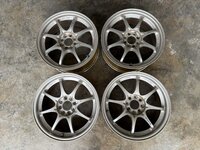
original rare Rays Volk Racing CE28 16x7jj offset...
Started by
david tao
Chassis and Wheels
Honda Jazz/Fit JSracing GTwing Spoiler
Started by
jeff6126
Exterior and Body
Toyota Vios NCP93 front bonnet hood
Started by
jeff6126
Exterior and Body
Honda civic fc varis spoiler
Started by
jeff6126
Exterior and Body
BMW F10 Msport front bumper set
Started by
jeff6126
Exterior and Body
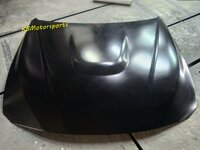
BMW F30 M3/GTS front bonnet hood
Started by
jeff6126
Exterior and Body
BMW F10 vorsteiner rear bumper diffuser
Started by
jeff6126
Exterior and Body
Mitsubishi Lancer Evo bodykit
Started by
jeff6126
Exterior and Body
BMW F30 M3 front skirt lip
Started by
jeff6126
Exterior and Body
Posts refresh every 5 minutes
battery relocation, again ..??
last 2 days, been DIY proton wira battery relocation. After replace very old stock intercooler piping, battery just wont fit nicely inside engine bay. Bonnet wont close perfectly.
Need welding cable, prefer 99.99%...
Hands on Ferrari F1 simulator
https://www.zerotohundred.com/wp-content/uploads/2010/08/arm-600x325.jpg
How’s this for a hands Ferrari F1 racing simulator? If you think you’re the bees knees with your Logitech G25, this massive robot arm-turned...
Spray paint for interior fabric
hi fellow DIY-ers, saw this on youtube
[youtube]l5GcKy0rv50[/youtube]
any idea where to find such spray paints in Msia ? tried ace hardware with no luck :(
Recent Posts
Darker Design : Mercedes-Benz Launches GLA Nightfall Edition in Malaysia
Started by
The_Mechanic
News and Features
Honda Malaysia Doubles Down on Hybrids: New CR-V Launches with Dual e:HEV...
Started by
The_Mechanic
News and Features
BateriHub Reaches 200-Store Milestone, Becomes Malaysia’s Largest...
Started by
The_Mechanic
News and Features
Been stalking for 3 years edy
Started by
dheepadarshan95
Introduction and Newbies
Recommendation: Turbocharger for 4B11 N.A engine
Started by
Mitevo7
Car Modification
Search
Online now
Enjoying Zerotohundred?
Log-in
for an ad-less experience
Home
Forums
Main Forums
General Talk
Groups and Meets
JB New Section........ Part 4.....