Menu
Home
Post Something
Forums
Current Activity
New posts
Search forums
What's new
New posts
Latest activity
News & Features
The Marketplace
Cars for Sale
Engine and Performance
Chassis and Wheels
Exterior and Body
Interior and Cockpit
ICE - In Car Entertainment
Car Shops and Services
Toys and Wares
All Other Stuff
Jobs and Vacancies
Looking For
Members
Log in
Register
What's new
Search
Search
Search titles only
By:
Current Activity
New posts
Search forums
Menu
Log in
Register
Reply to thread
See what others are reading now! Try Forums >
Current Activity
Home
Forums
Main Forums
Car Talk
Car Modification
Tuning for Perfection
JavaScript is disabled. For a better experience, please enable JavaScript in your browser before proceeding.
You are using an out of date browser. It may not display this or other websites correctly.
You should upgrade or use an
alternative browser
.
Message
<blockquote data-quote="xbalance2002" data-source="post: 1236114" data-attributes="member: 24760"><p>About different types of management system upgrades and airflow meters versus MAP sensors. stressed the importance of good tuning. </p><p></p><p>"The skills of the tuner are vitally important, whatever the approach you take," he says. </p><p></p><p>It's all too easy to plough your money into hardware, neglect tuning and end up with a car that is temperamental to start, thirsty, down on power and high in emissions. </p><p></p><p>In this article we'll explore engine management tuning.</p><p></p><p><strong>Dyno Tuning</strong></p><p>It doesn't matter if you've opted for an interceptor, piggy-back, stand-alone system or a factory ECU remap, there is one step that cannot be avoided - the engine must be tuned on a dynamometer. The majority of workshops have only the facility to tune the car on a chassis dyno, but the bulk of extensive tuning is ideally performed in an engine dyno cell. Most people steer away from engine dynos since the engine must be removed from the vehicle, adapters may need to be fabricated and there are greater costs involved. </p><p></p><p>"The time it takes to tune an aftermarket stand-alone computer depends how much base programming comes with the computer, the characteristics of the engine and your experience with the given injectors etc," says David Alexander. </p><p></p><p>"A MicroTech system comes with a program that should run the engine, but some of the sophisticated ones with more parameters arrive pretty well blank - for example, an Autronic, MoTeC or a new Wolf 3D." </p><p></p><p>This can have a considerable effect on the time and cost involved in tuning. </p><p></p><p>In most situations, you probably spend four hours tuning a stand-alone system on the chassis dyno.</p><p></p><p>"Some engines may take longer if they have unusual characteristics at certain sites. </p><p></p><p>"Engines with hand-made intake manifolds, relocated injectors and big cams make it difficult to achieve a good result that spans the whole way through the rev range. </p><p></p><p>"On top of that, some ECUs take a lot of keystrokes and so take longer to tune than others. Some also lack the parameters you need to achieve a good end result, so you end up wasting time trying to fix it some other way." </p><p></p><p>The base mapping of fuel and ignition comes largely through experience - knowing where an engine might need ignition advance, or where it might be safest running rich comes from prior experimentation. Most tuners enter the initial batch of timing values very conservatively and first focus on the amount of fuel flowing into the engine. Ignition timing values are usually set second, specific to a particular fuel octane and (where appropriate) boost level.</p><p></p><p>"During a typical tune the inlet air temperatures vary hugely, so you end up with tuning across a reasonable temperature range," says David. </p><p></p><p>"Most systems have air temperature correction, but there's more to it that that -there's the location of the temperature sensor and all kinds of variables. I think intuition is more important in tuning for different temperature ranges. </p><p></p><p>In the case of an interceptor, you don't have to go back and worry about all of these parameters. All you usually want to do is get in there to make a couple of tweaks to the existing system - like lean the mixtures at certain sites - and that's it. Everything else is already correct. The same goes for a remap of an original ECU," says David. "And that saves a lot of time."</p><p></p><p><strong>Mapping on the Road</strong></p><p>Once the engine has been extensively tuned on a chassis dyno, is it necessary to then hit the road to tune for real-world drivability?</p><p></p><p>"It's certainly necessary to road test the vehicle once it's been chassis dyno tuned. I can get it running pretty right on the chassis dyno because I've been on there for such a long time but, regardless, you still need to put it on the road.</p><p></p><p></p><p>"There are some times when you need to do some mapping on the road at very light throttle, trailing throttle and over-run situations - things you can't quite simulate on the dyno.</p><p></p><p>"Decel is often included as part of an emissions test and you can't really pull the kind of manifold vacuum on the dyno that you can on the road. You can also get the right acceleration characteristics from those heavy vacuum conditions and it's also easier to determine if the decel shut-off resume might not be at the right point.</p><p></p><p>"So, yes, there are certainly times when you need to take the car out onto the road and give the tune a tweak in those light load areas."</p><p></p><p><strong><span style="font-size: 18px">How Car Manufacturers Tune Their Engines</span></strong></p><p></p><p>Don't expect that a perfect tune can be achieved with only a very short time on a chassis dyno. To put things into context, we need to consider the efforts that car manufacturers put into mapping production engines. Literally thousands of hours are spent making changes, numerous engines are put through torturous durability testing and followed by extensive on-road testing. This typically involves testing in weather extremes (snow field to the desert). These are the lengths that must be taken to ensure a car performs in all conditions. </p><p></p><p><strong>Cold Start</strong></p><p>Having done stories on countless cars with programmable management, AutoSpeed has noticed that a very high number struggle in cold-start conditions. We asked David Alexander about the problem.</p><p></p><p>"Well, the proper definition of cold start is a window that's only open for a number of seconds. Once you get any heat into the combustion chamber, the cold start environment is pretty much gone. </p><p></p><p>"You can get cold start characteristics right through experience, but there are some engines and set-ups that are a real challenge - factors like fuel temperature, fuel pressure, ambient temperature, combustion chamber design and ignition timing all play a part.</p><p></p><p>"Whenever I tune a system I always get the car until the next morning when I can go in and set the cold start and warm-up cycle parameters.</p><p></p><p>"For sure, though, factory computers have a lot more starting maps than any other aftermarket computer. The new Wolf system has quite a few starting strategies these days, but even a factory system from fifteen years ago has something like a hundred. The limitations of programmable systems is certainly a major issue in that particular area of tuning".</p><p></p><p><strong>Factory Mapping v Aftermarket Mapping</strong></p><p></p><p>The car companies set their cars up to cope with every conceivable condition that might be experienced in any part of the world. They'll also draw upon their experiences in every part of the world and they'll enter the according data into the ECU - it may never be accessed in the lifetime of the vehicle, but it's always there.</p><p></p><p>"With an aftermarket system you can get very good results for what is typically a narrower application. You can get the car so it's nice to drive on a day to day basis, but to get things spot-on for every condition you'd have to spend weeks playing. And in many instances you'll never be finished because of limitations in the flexibility of the aftermarket computer. The brainpower is relatively limited. </p><p></p><p>"Winter and summer changes in local fuel mixes can cause detonation issues if you're tuning for absolutely ten-tenths. On the other hand, the knock-sensed factory systems - particularly the new Subarus - with closed-loop fuelling and timing will keep the engine running as well as it possibly can. They're really extremely advanced."</p></blockquote><p></p>
[QUOTE="xbalance2002, post: 1236114, member: 24760"] About different types of management system upgrades and airflow meters versus MAP sensors. stressed the importance of good tuning. "The skills of the tuner are vitally important, whatever the approach you take," he says. It's all too easy to plough your money into hardware, neglect tuning and end up with a car that is temperamental to start, thirsty, down on power and high in emissions. In this article we'll explore engine management tuning. [B]Dyno Tuning[/B] It doesn't matter if you've opted for an interceptor, piggy-back, stand-alone system or a factory ECU remap, there is one step that cannot be avoided - the engine must be tuned on a dynamometer. The majority of workshops have only the facility to tune the car on a chassis dyno, but the bulk of extensive tuning is ideally performed in an engine dyno cell. Most people steer away from engine dynos since the engine must be removed from the vehicle, adapters may need to be fabricated and there are greater costs involved. "The time it takes to tune an aftermarket stand-alone computer depends how much base programming comes with the computer, the characteristics of the engine and your experience with the given injectors etc," says David Alexander. "A MicroTech system comes with a program that should run the engine, but some of the sophisticated ones with more parameters arrive pretty well blank - for example, an Autronic, MoTeC or a new Wolf 3D." This can have a considerable effect on the time and cost involved in tuning. In most situations, you probably spend four hours tuning a stand-alone system on the chassis dyno. "Some engines may take longer if they have unusual characteristics at certain sites. "Engines with hand-made intake manifolds, relocated injectors and big cams make it difficult to achieve a good result that spans the whole way through the rev range. "On top of that, some ECUs take a lot of keystrokes and so take longer to tune than others. Some also lack the parameters you need to achieve a good end result, so you end up wasting time trying to fix it some other way." The base mapping of fuel and ignition comes largely through experience - knowing where an engine might need ignition advance, or where it might be safest running rich comes from prior experimentation. Most tuners enter the initial batch of timing values very conservatively and first focus on the amount of fuel flowing into the engine. Ignition timing values are usually set second, specific to a particular fuel octane and (where appropriate) boost level. "During a typical tune the inlet air temperatures vary hugely, so you end up with tuning across a reasonable temperature range," says David. "Most systems have air temperature correction, but there's more to it that that -there's the location of the temperature sensor and all kinds of variables. I think intuition is more important in tuning for different temperature ranges. In the case of an interceptor, you don't have to go back and worry about all of these parameters. All you usually want to do is get in there to make a couple of tweaks to the existing system - like lean the mixtures at certain sites - and that's it. Everything else is already correct. The same goes for a remap of an original ECU," says David. "And that saves a lot of time." [B]Mapping on the Road[/B] Once the engine has been extensively tuned on a chassis dyno, is it necessary to then hit the road to tune for real-world drivability? "It's certainly necessary to road test the vehicle once it's been chassis dyno tuned. I can get it running pretty right on the chassis dyno because I've been on there for such a long time but, regardless, you still need to put it on the road. "There are some times when you need to do some mapping on the road at very light throttle, trailing throttle and over-run situations - things you can't quite simulate on the dyno. "Decel is often included as part of an emissions test and you can't really pull the kind of manifold vacuum on the dyno that you can on the road. You can also get the right acceleration characteristics from those heavy vacuum conditions and it's also easier to determine if the decel shut-off resume might not be at the right point. "So, yes, there are certainly times when you need to take the car out onto the road and give the tune a tweak in those light load areas." [B][SIZE="5"]How Car Manufacturers Tune Their Engines[/SIZE][/B] Don't expect that a perfect tune can be achieved with only a very short time on a chassis dyno. To put things into context, we need to consider the efforts that car manufacturers put into mapping production engines. Literally thousands of hours are spent making changes, numerous engines are put through torturous durability testing and followed by extensive on-road testing. This typically involves testing in weather extremes (snow field to the desert). These are the lengths that must be taken to ensure a car performs in all conditions. [B]Cold Start[/B] Having done stories on countless cars with programmable management, AutoSpeed has noticed that a very high number struggle in cold-start conditions. We asked David Alexander about the problem. "Well, the proper definition of cold start is a window that's only open for a number of seconds. Once you get any heat into the combustion chamber, the cold start environment is pretty much gone. "You can get cold start characteristics right through experience, but there are some engines and set-ups that are a real challenge - factors like fuel temperature, fuel pressure, ambient temperature, combustion chamber design and ignition timing all play a part. "Whenever I tune a system I always get the car until the next morning when I can go in and set the cold start and warm-up cycle parameters. "For sure, though, factory computers have a lot more starting maps than any other aftermarket computer. The new Wolf system has quite a few starting strategies these days, but even a factory system from fifteen years ago has something like a hundred. The limitations of programmable systems is certainly a major issue in that particular area of tuning". [B]Factory Mapping v Aftermarket Mapping[/B] The car companies set their cars up to cope with every conceivable condition that might be experienced in any part of the world. They'll also draw upon their experiences in every part of the world and they'll enter the according data into the ECU - it may never be accessed in the lifetime of the vehicle, but it's always there. "With an aftermarket system you can get very good results for what is typically a narrower application. You can get the car so it's nice to drive on a day to day basis, but to get things spot-on for every condition you'd have to spend weeks playing. And in many instances you'll never be finished because of limitations in the flexibility of the aftermarket computer. The brainpower is relatively limited. "Winter and summer changes in local fuel mixes can cause detonation issues if you're tuning for absolutely ten-tenths. On the other hand, the knock-sensed factory systems - particularly the new Subarus - with closed-loop fuelling and timing will keep the engine running as well as it possibly can. They're really extremely advanced." [/QUOTE]
Insert quotes…
Verification
Post reply
The Marketplace Latest
original WedsSport SA70 18x9jj offset +32 5H pcd...
Started by
david tao
Chassis and Wheels
BRAND NEW original rare Yokohama ADVAN Racing RG4...
Started by
david tao
Chassis and Wheels
original rare Yokohama ADVAN Racing RZ2 RZii...
Started by
david tao
Chassis and Wheels
original rare Yokohama ADVAN Racing RG 16x7jj...
Started by
david tao
Chassis and Wheels
original rare Yokohama ADVAN Racing RG 16x7jj...
Started by
david tao
Chassis and Wheels
original rare Rays Volk Racing TE37SL 18x9jj offset...
Started by
david tao
Chassis and Wheels
Spoon Sw388 18x10J+40 5H120 Rim Rims Civic FL5 Type R
Started by
aycy
Chassis and Wheels
Spoon Crane Neck Wing Carbon Spoiler GT Wing Honda...
Started by
aycy
Exterior and Body
Honda Jazz/Fit GK Mugen body kit
Started by
jeff6126
Exterior and Body
original TWS Taneisya P1 racing 17x8.5jj offset +28...
Started by
david tao
Chassis and Wheels
Posts refresh every 5 minutes
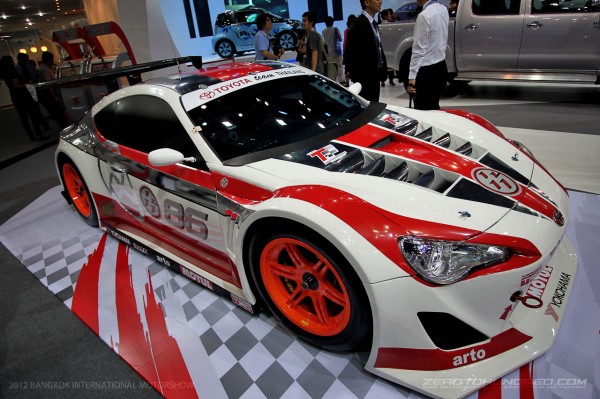
Coverage: The 33rd Bangkok International Motorshow (2012)
Toyota FT 86 in race trim; battle-ready for the the tarmac!
We've just returned from wonderfully colourful Bangkok...
Anyone know where to look for S15 spec-s?
Hi guys,
Im just wondering if there is anyone who knows where I can find registered or unregistered S15 spec-s versions (the non-turbo) and also how much is the market price for it currently.
*and yes, I do know...
where to get??
Guys???..hardware shop??
..
how much for a can hah??
http://www.duplicolor.com/gallery/gallery_images/can_engine.jpg
Both Engine Enamel and High Heat Paint formulas now contain...
Recent Posts
2026 Vios HEV launched with Local Battery Assembly - UMW Toyota Motor
Started by
The_Mechanic
News and Features
SPPF: The Future of Automotive Surface Protection - A Technical Overview
Started by
The_Mechanic
News and Features
Upping Wira 1.5 MMC performance
Started by
Nyfka
Car Modification
Volvo Malaysia Launches Locally Assembled ES90 Electric Sedan
Started by
The_Mechanic
News and Features
AMPANG mari!!ZTH member
Started by
shahaff_07
Groups and Meets
Search
Online now
Enjoying Zerotohundred?
Log-in
for an ad-less experience
Home
Forums
Main Forums
Car Talk
Car Modification
Tuning for Perfection