My review of the Satria Neo:
It seems to me the Satria Neo made a rather quiet entry into the local automotive market. It's either that or perhaps I have been a little disconnected from the world and the happenings around me hence not noticing it. The Neo simply did not receive the level of anticipation and interest from the public as the Perodua MyVi a while ago.
I decided to make a stop at Proton's showroom in Mutiara Damansara last Sunday afternoon to clear my curiosity. It was one of the rare occations I simply stopped by to test drive a car without first knowing anything or reading anything about it at all.
Things didn't seem to go well that afternoon for Proton. First they did not have the 1.6L Manual for test drive that day, secondly there was a long list of customers waiting to take their turn behind the wheel of whatever Satria Neo model was available that day and to top it off one of the customers crashed one of the test cars and the test drive program nearly grind to a halt. Having said all that, with the help of the salesperson assigned to me not only did we secure a test car, but neither did we really have to wait in line. He got me a 1.3L Auto version and off we went.
Brief comments follows:
Interior:
Very modern, moderately detailed, driver and passenger friendly. The downside is that there is just too much plastic all over. It seems as though Proton never learned their lesson following the harsh comments on the Gen-2's interior.
Engine:
The 1.3L block was somewhat unresponsive. The power does not come in as and when you want it but rather it takes a lot of patience and learning the engine's behaviour to fully maximise its ability. It will be wise to keep the throttle slightly open when taking corners at high speeds so that it does not take too long to rev up in the event power is needed to apply correction. Having said that, the engine does have its pulling power. At 94hp on the 1.3L and 110hp on the 1.6L version it is definitely an improvement over proton's previous models with Mitsubishi blocks.
Gearbox:
If you think the engine is bad, wait until you feel the gearbox. The ratios were simply not matched for this car. Attempting to cruise the car around at low speed only produces spikes of high revs and sluggish gear changes. Don't be surprised that this significantly affects the car's fuel consumption. From the way the gearbox felt, this car might just turn out to be a fuel guzzler while driving through slow traffic. Perhaps the manual versions would be much better.
Steering:
The car could benefit from slightly more power assistance at the wheel. Having said that, thumbs-up!! minimal amount of free play at the wheel means that whatever input is given is transmitted to the wheels and likewise whatever happens at the wheels are accurately felt on the steering wheel.
Suspension:
The suspension setup is good thanks the assistance of Lotus tuning. Body roll is present but is greatly minimised as compared to Proton's early models. The system does a good job of absorbing the shocks produced by running over yellow lines, accidental pothole encounters and uneven road surfaces. The ride continues to feel smooth and refined.
Handling:
Two Thumbs Up again!!! The handling of the Satria Neo demonstrates Proton's improvement as a result of continuous R&D efforts and Lotus's involvement in the development works. The new car handles very well indeed. I personally found the car a little slippery but there could have been a few factors contributing to that. For one, the brand new tyres were probably not run in yet, the road surface could have been slightly slippery that day and the Neo's kerb weight of 1146 kg was on the high side for a car of its size. Having said that, the Neo is a fun car to take for a spin. Push the car too tight into a corner and the car will start to understeer in a smooth and predictable manner. I was particularly impressed at how easy it was to correct understeer moments with just a slight correction on the steering and slight application of power. Once corrected the car catches back into control with barely a hint of twitching, thanks to the rigidity of the new chassis. This behaviour would easily boost the confidence level of any driver behind its wheels.
Conclusion:
Pros:
Although Proton remains a long way from being a world class car manufacturer, the Satria Neo marks another milestone in Proton's development and growth. It is certainly an improvement over previous models.
Handling is commendable.
Modern design on the interior.
Power output has been increased ~10% over previous Mitsubshi engined models of similar capacity.
4 wheel disc brake comes standard even on the lowest version.
Cons:
Reliability remains a question
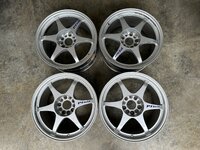
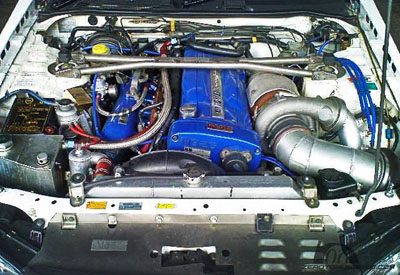
A car fully made by Proton means limited availability of aftermarket compatible parts. Furthermore, almost all spare parts would have to come from Proton.
The scarce availability of aftermarket tuner parts for this car would make it unattractive for car enthusiasts in the game of car modifications.
Inefficient gear ratios means lower fuel economy and the car's acceleration could have been better. Whether this problem applies to the other Satria Neo models remains a question.
Foot pedal positions and design could have been done better to provide the driver with better control of the car.
Most plastic parts could have been made metal to provide the car with a greater sense of boldness and quality






 :wavey: