Kia opened in December 1944 as Hyungsung Precision Industry, a manufacturer of steel tubing and bicycle parts. The original factory was located in Yougdeungpo in the south of modern-day Seoul. In March 1952 the factory built Korea’s first domestic bicycle, the Samcholli-ho, and changed names to the Kia Industrial Company. The “Kia” name derives from two Chinese characters “ki” meaning “rising up” and “a” meaning Asia. Kia can therefore be roughly translated as “Rising out of the East” or “Rising out of Asia.”
A decade later the Korean motor vehicle industry was born when Kia created the C-100 motorcycle. A mere three months later, Kia’s Shiheung production line was building three wheeled trucks known as the K360. Production of three wheel trucks continued until 1973, by which time the company had sold 25,000 of the vehicles. Motorcycle production ended in 1981.
The Titan four-wheel truck developed in 1971 was so ubiquitous that in Korea, Titan became a Korean synonym for “truck.” Kia produced Korea’s first gasoline engine in 1973 and in October 1974 Korea’s first passenger car, the Brisa. The Brisa would later become the first Korean vehicle to be exported, when it was sold in the Middle East. Korea’s first diesel engine was also produced in 1978.
By 1979 Kia was producing under license the Peugeot 604 and the Fiat 132 sedans. In 1986 under an equity partnership with Ford Motor Company, Kia began producing the Pride or Festiva small car and later the Ford Aspire. Development of the Pride was carried out at Kia’s first dedicated R&D center which opened in October 1984 in Sohari, near Seoul. It has since been joined by two domestic and four overseas R&D centers. The first overseas R&D center was opened in Japan in 1989.
In 1992 Kia established its U.S. subsidiary, Kia Motors America. In 1994 Kia officially entered the U.S. market to sell vehicles at a network of dealerships that were initially only in California. European operations began in 1993 with the launch of the Sephia passenger car.
In 1997 the Asian financial crisis compounded difficulties for Kia Motors and the company was prevented from expanding its lineup. The takeover of Kia by Hyundai motors in 1998 marked the beginning of a rapid turnaround. By 1999 Kia was profitable once more and has remained so ever since. The formation of the Hyundai Automotive Group in Sept. 2000 saw Kia begin to benefit from synergies in research and manufacturing. Showing confidence in the growing dependability of their product, Kia launched the Long Haul Warranty program in 2001. This program varies somewhat in different parts of the globe, but far surpasses what is offered by most other manufacturers.
In 2002 Kia produced its ten millionth car. Landmark models such as the Carnival/Sedona minivan and the Sorento premium SUV are propelling Kia rapidly forward in terms of product quality and consumer appeal. The company also became the major sponsor of the Australian Open tennis tournament in 2002.
With operations in 160 countries around the world, Kia Motors is a true global company. A part of the Hyundai Automobile Group since September 2000, Kia Motors’ retail operations are conducted through a distributor network covering 160 countries around the world. Kia Motors also has ten overseas subsidiaries and four overseas R&D facilities: two in the United States and one each in Europe and Japan.
In 2002 Kia sold almost 60% of its production capacity in overseas markets. Almost 600,000 vehicles were sold in markets spreading from Norway to South Africa and from giant China to tiny Trinidad. The U.S. market accounts for nearly 50% of Kia’s exports with Europe and Canada buying much of the remainder. Peter Butterfield, a U.S. native and former CEO of Kia's U.S. sales unit, says this productivity can be attributed to Confucian beliefs about hierarchy and respect for elders that he says are stronger in South Korea than anywhere else. Speed and efficiency are one result.
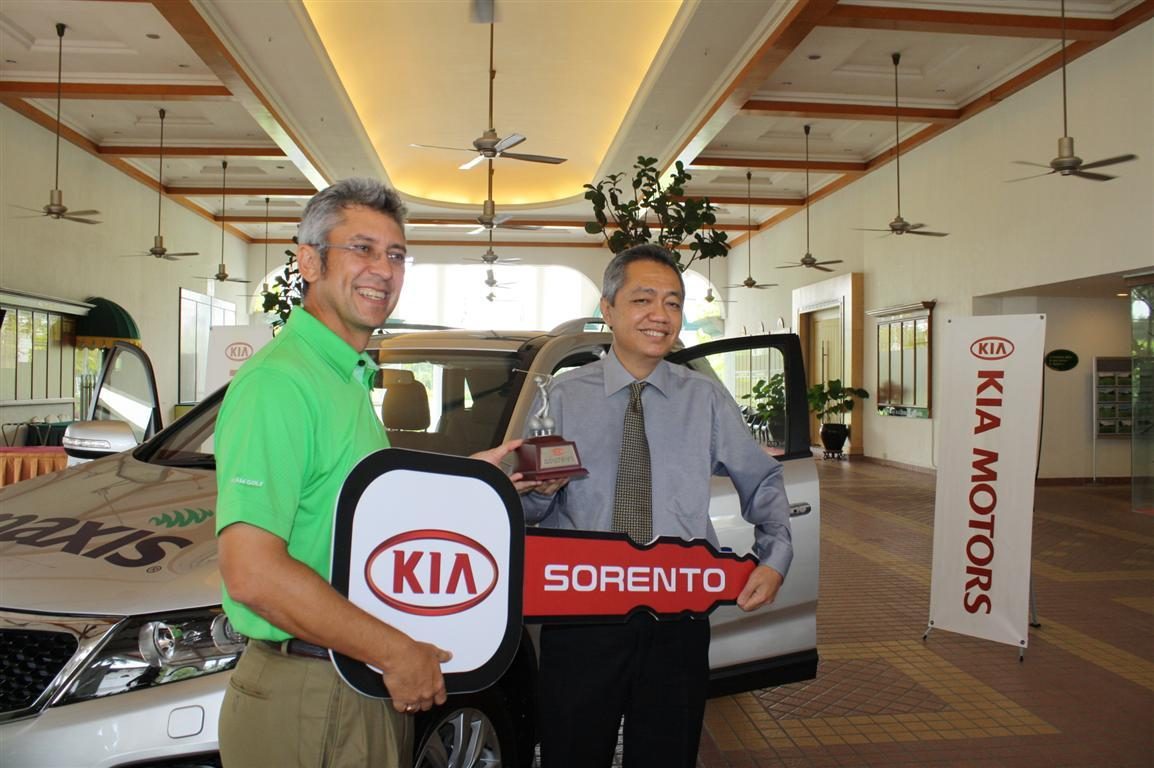
Exemplified by vehicles such as the Carnival/Sedona, which has won accolades around the world for quality and extraordinary value, Kia is redefining many of the segments in which it operates. The real brand leader, however is the Sorento. While the Sedona raised awareness of Kia Motors, the Sorento exemplifies exactly what the company is capable of. From its inception, the Sorento was intended to be a defining product. The company has invested more time and resources into the vehicle than any other car in its history. Comprehensive consumer clinics conducted in the U.S. and Europe placed the Sorento on an equal footing with some of the world’s top premium brands.
"It's amazing how well Hyundai and Kia have been accepted by upper-income customers, even in places like Switzerland,'' says Christian Takushi, whose funds at Swissca Portfolio Management AG in Zurich hold 58,600 Hyundai Motor preferred shares and 31,636 common shares.
Kia Sportage, Compact SUV with 4WD, standard head curtain airbags and stability control
Currently all manufacturing for both the domestic and international market is done in Korea. However, Kia maintains assembly plants in ten countries. Foreign assembly has been running for over ten years and currently covers the Pride, Spectra, Sephia, Sportage, Shuma, and the Rio. Production capacity for Kia’s foreign operations is around 300,000 units. Kia regularly invites staff from foreign assembly plants such as Malaysia and China to Korea to learn the company’s advanced engineering technologies and manufacturing systems. This is paving the way for Kia to increase the scale of its assembly operations.
In Ecuador for example, a recent agreement with local partner Aymesa added the Rio compact car to the local assembly program. At the time Ecuador produced 3,000 Sportages per year. The new agreement added 7,000 Rios and significantly increased Kia’s presence in the Latin American market.
In November 2002 Kia launched the Cheolima, the first car the company designed for and manufactured in China. Kia is also contracted to extend its production facilities in China to the point at which the company will be manufacturing 500,000 cars every year in China by 2008. Kia and Hyundai opened a jointly run U.S. Design Center in February 2003 and a U.S. proving ground/test track in January 2005.
The new U.S. design center, a $30 million, 90,000 square foot facility opened in Irvine California employs more than 100 staff. Mong-Koo Chung, chairman and CEO of Hyundai Motor Co. and Kia Motors Corp. said of the center, "This will be the new mecca of automotive technology, attracting the finest automotive designers and engineers. And in this center of excellence, everyone will be given the opportunity to do their best to advance the design of Hyundai and Kia cars." Kia has just announced plans for a European design center in Frankfort, Germany. It is scheduled to open in March 2007 and will be independent of Hyundai.
A decade later the Korean motor vehicle industry was born when Kia created the C-100 motorcycle. A mere three months later, Kia’s Shiheung production line was building three wheeled trucks known as the K360. Production of three wheel trucks continued until 1973, by which time the company had sold 25,000 of the vehicles. Motorcycle production ended in 1981.
The Titan four-wheel truck developed in 1971 was so ubiquitous that in Korea, Titan became a Korean synonym for “truck.” Kia produced Korea’s first gasoline engine in 1973 and in October 1974 Korea’s first passenger car, the Brisa. The Brisa would later become the first Korean vehicle to be exported, when it was sold in the Middle East. Korea’s first diesel engine was also produced in 1978.
By 1979 Kia was producing under license the Peugeot 604 and the Fiat 132 sedans. In 1986 under an equity partnership with Ford Motor Company, Kia began producing the Pride or Festiva small car and later the Ford Aspire. Development of the Pride was carried out at Kia’s first dedicated R&D center which opened in October 1984 in Sohari, near Seoul. It has since been joined by two domestic and four overseas R&D centers. The first overseas R&D center was opened in Japan in 1989.
In 1992 Kia established its U.S. subsidiary, Kia Motors America. In 1994 Kia officially entered the U.S. market to sell vehicles at a network of dealerships that were initially only in California. European operations began in 1993 with the launch of the Sephia passenger car.
In 1997 the Asian financial crisis compounded difficulties for Kia Motors and the company was prevented from expanding its lineup. The takeover of Kia by Hyundai motors in 1998 marked the beginning of a rapid turnaround. By 1999 Kia was profitable once more and has remained so ever since. The formation of the Hyundai Automotive Group in Sept. 2000 saw Kia begin to benefit from synergies in research and manufacturing. Showing confidence in the growing dependability of their product, Kia launched the Long Haul Warranty program in 2001. This program varies somewhat in different parts of the globe, but far surpasses what is offered by most other manufacturers.
In 2002 Kia produced its ten millionth car. Landmark models such as the Carnival/Sedona minivan and the Sorento premium SUV are propelling Kia rapidly forward in terms of product quality and consumer appeal. The company also became the major sponsor of the Australian Open tennis tournament in 2002.
With operations in 160 countries around the world, Kia Motors is a true global company. A part of the Hyundai Automobile Group since September 2000, Kia Motors’ retail operations are conducted through a distributor network covering 160 countries around the world. Kia Motors also has ten overseas subsidiaries and four overseas R&D facilities: two in the United States and one each in Europe and Japan.
In 2002 Kia sold almost 60% of its production capacity in overseas markets. Almost 600,000 vehicles were sold in markets spreading from Norway to South Africa and from giant China to tiny Trinidad. The U.S. market accounts for nearly 50% of Kia’s exports with Europe and Canada buying much of the remainder. Peter Butterfield, a U.S. native and former CEO of Kia's U.S. sales unit, says this productivity can be attributed to Confucian beliefs about hierarchy and respect for elders that he says are stronger in South Korea than anywhere else. Speed and efficiency are one result.
Exemplified by vehicles such as the Carnival/Sedona, which has won accolades around the world for quality and extraordinary value, Kia is redefining many of the segments in which it operates. The real brand leader, however is the Sorento. While the Sedona raised awareness of Kia Motors, the Sorento exemplifies exactly what the company is capable of. From its inception, the Sorento was intended to be a defining product. The company has invested more time and resources into the vehicle than any other car in its history. Comprehensive consumer clinics conducted in the U.S. and Europe placed the Sorento on an equal footing with some of the world’s top premium brands.
"It's amazing how well Hyundai and Kia have been accepted by upper-income customers, even in places like Switzerland,'' says Christian Takushi, whose funds at Swissca Portfolio Management AG in Zurich hold 58,600 Hyundai Motor preferred shares and 31,636 common shares.
Kia Sportage, Compact SUV with 4WD, standard head curtain airbags and stability control
Currently all manufacturing for both the domestic and international market is done in Korea. However, Kia maintains assembly plants in ten countries. Foreign assembly has been running for over ten years and currently covers the Pride, Spectra, Sephia, Sportage, Shuma, and the Rio. Production capacity for Kia’s foreign operations is around 300,000 units. Kia regularly invites staff from foreign assembly plants such as Malaysia and China to Korea to learn the company’s advanced engineering technologies and manufacturing systems. This is paving the way for Kia to increase the scale of its assembly operations.
In Ecuador for example, a recent agreement with local partner Aymesa added the Rio compact car to the local assembly program. At the time Ecuador produced 3,000 Sportages per year. The new agreement added 7,000 Rios and significantly increased Kia’s presence in the Latin American market.
In November 2002 Kia launched the Cheolima, the first car the company designed for and manufactured in China. Kia is also contracted to extend its production facilities in China to the point at which the company will be manufacturing 500,000 cars every year in China by 2008. Kia and Hyundai opened a jointly run U.S. Design Center in February 2003 and a U.S. proving ground/test track in January 2005.
The new U.S. design center, a $30 million, 90,000 square foot facility opened in Irvine California employs more than 100 staff. Mong-Koo Chung, chairman and CEO of Hyundai Motor Co. and Kia Motors Corp. said of the center, "This will be the new mecca of automotive technology, attracting the finest automotive designers and engineers. And in this center of excellence, everyone will be given the opportunity to do their best to advance the design of Hyundai and Kia cars." Kia has just announced plans for a European design center in Frankfort, Germany. It is scheduled to open in March 2007 and will be independent of Hyundai.