Menu
Home
Post Something
Forums
Current Activity
New posts
Search forums
What's new
New posts
Latest activity
News & Features
The Marketplace
Cars for Sale
Engine and Performance
Chassis and Wheels
Exterior and Body
Interior and Cockpit
ICE - In Car Entertainment
Car Shops and Services
Toys and Wares
All Other Stuff
Jobs and Vacancies
Looking For
Members
Log in
Register
What's new
Search
Search
Search titles only
By:
Current Activity
New posts
Search forums
Menu
Log in
Register
Reply to thread
See what others are reading now! Try Forums >
Current Activity
Home
Forums
Main Forums
Car Talk
Forced Induction & Engine Management
Evo1 speedcut,max boost,plug question.
JavaScript is disabled. For a better experience, please enable JavaScript in your browser before proceeding.
You are using an out of date browser. It may not display this or other websites correctly.
You should upgrade or use an
alternative browser
.
Message
<blockquote data-quote="FatAssRubber" data-source="post: 2805432" data-attributes="member: 48972"><p>Yo Bro.. read on.. on plugs..</p><p></p><p>The Skinny on Spark Plugs</p><p></p><p>http://www.superchargersonline.com/content.asp?ID=11</p><p></p><p>With contributions by Ed Martinez - Performance Solutions Engineering</p><p></p><p>Whether you have a forced induction unit installed on your engine, or are just running a naturally aspirated setup, the performance of your vehicle is greatly enhanced (or inhibited) by your spark plugs. The type of spark plugs that you have, the condition that they are in and the current gap at which they are set all have a detrimental effect on the drivability of your application and the performance of your vehicle. Gone are the days of the magical, "one-type-fixes-all" spark plugs.</p><p></p><p>Let's Get Technical</p><p></p><p>The raging debate seems to be platinum vs. copper vs. conventional style spark plugs and which one is better. Keep in mind that there is not one universal answer or truth to this inquiry. Rather, your specific application should determine the type of spark plugs that you use. A few examples follow:</p><p></p><p>Most new vehicles come standard with platinum spark plugs. These are OEM parts and are designed to work great on a naturally aspirated setup. When supercharging your engine, you should look to purchase a set of OEM spark plugs that are 1-2 heat ranges cooler than stock. (As an example, a 1996 Mustang Cobra comes factory direct with platinum spark plugs. When supercharging, you should look for a set of Motorcraft or Autolite spark plugs that run 1 heat range cooler than stock). The OEM platinum spark plugs work great up to 10-13 psi in most boosted applications. Once your application runs above 10-13 psi of boost (more of a race-style application), you want to consider switching to a more conventional non-resistor set of spark plugs.</p><p></p><p>In a racing environment, there are generally no emissions standards and an excessive amount of fuel present. This environment can cause spark blowout if you are not using the appropriate setup. Platinum spark plugs are not recommended in this situation because, more often than not, spark blowout will occur due to the fact that the tip surfaces of a platinum spark plug is not large enough to make a good conductor in a rich, super high compression environment. Standard type spark plugs provide plenty of surface area for the spark to conduct under such conditions. Therefore a conventional non-resistor spark plug is recommended because it has a larger surface area that will allow the spark to occur.</p><p></p><p>Again, the type of spark plug that you will eventually choose depends on your engine and how it is designed. The guidelines that have been established, in the following paragraphs, should be treated as such. Whether you have a daily driver that is running 6-8psi of boost, or a race application running 10+psi of boost, you should consider seeking the counsel of a certified / qualified mechanic to determine what type of spark plugs are right for you. Remember, there are correct uses for all types of spark plugs.</p><p></p><p>The Selection Process</p><p></p><p>When you are looking to change out your set of spark plugs, there are a few guidelines that are recommended. First of all, "keep it in the family." If you're driving an American made car, use American spark plugs. Likewise for all makes of vehicles. Consider the following recommendations for purchasing your spark plugs (based on the make of your vehicle):</p><p></p><p>1) Ford = Motorcraft or Autolite</p><p>2) GM = AC Delco</p><p>3) Chrysler/Dodge = Champion</p><p>4) Toyota = Nippen/Denso (ND)</p><p>5) Nissan = NGK</p><p>6) Honda = Nippen/Denso (ND) or NGK</p><p>7) Most German Vehicles = Bosch</p><p></p><p>Generally, it is recommended to use a fresh set of original equipment (OEM) spark plugs that are set 1-2 heat ranges cooler that stock. As a general rule of thumb, for each 8-10psi of boost, you want to run spark plugs that are 1 heat range cooler. All types of spark plugs work fine as long as you have a clean burning engine. There’s no such thing as, “What are the best spark plugs?” There are some spark plugs that you should avoid using in certain situations, but that is due to the application and not to the quality of spark plug. </p><p></p><p>Spark Plug "Fouling"</p><p></p><p>On the flip-side, you want to be able to run as cool a spark plug as possible without your spark plug "fouling". When spark plugs foul, you will notice a residue of carbon and by-product that will begin to coat the porcelain. The OEM spark plugs for your vehicle are hot enough to burn this residue into a powder-like substance that is discharged through your exhaust. However, the trick is to find a spark plug that runs cool enough to support a supercharged environment while also burning hot enough to prevent spark plug fouling.</p><p></p><p>To select the appropriate spark plugs for your application, there are a few steps that you should follow:</p><p></p><p>1) After your supercharger is installed, make sure that you are running with spark plugs that are 1 heat range cooler than stock.</p><p>2) Properly tune your fuel delivery curve so that the application is not running too rich or too lean.</p><p>3) Remove the spark plugs that are 1 heat range cooler than stock.</p><p>4) Install spark plugs that are 2 heat ranges than stock and run them for approximately 200-300 miles.</p><p>5) Remove one of the spark plugs and check for a residue of carbon and engine by-product (black substance).</p><p></p><p>If there is fouling (residue is present) then remove the 2 heat ranges cooler spark plugs and re-install the 1 heat range cooler spark plugs. If no fouling is present, then leave the 2 heat ranges cooler spark plugs installed as they are a perfect fit for your supercharged application. The image below indicates the difference in appearance of a spark plug:</p><p></p><p></p><p></p><p></p><p></p><p>Spark Plug is too hot!</p><p>Spark Plug is fouled!</p><p>Spark Plug is just right!</p><p></p><p></p><p>What is Spark Plug Gapping?</p><p></p><p>Another method of insuring proper spark is through gapping. The term “gapping” means to provide an adequate jumping distance for the spark to terminate. Gapping spark plugs is very important in both non-supercharged and supercharged applications. The average spark plug gap between the electrode and the ground is determined by the engineers that have designed the ignition. Usually, when an engine is converted to being supercharged, the gap is reduced to approximately .032 to .035. This reduction in the gap helps prevent what’s known as “spark blowout" due to the increased amount of fuel and cylinder pressure. The higher the cylinder pressure the harder it is for the spark to occur. The ability of the spark to actually take place is enhanced by decreasing the spark plug gap.</p><p></p><p>A very common problem that is seen time and time again is an application that runs smoothly until about 3,000 rpm. At that point, the engine usually sputters and the power that was being created has become non-existent. If you find yourself saying, "I can’t get this car to run…I have no idea what’s going on…it’s not running properly..." - Check the spark plug gap! More often than not, once you properly gap your spark plugs, all your worries seem to go away. It really is magic!</p><p></p><p>How to Gap Your Spark Plugs</p><p></p><p>When gapping your spark plugs, it is recommended that you always use a spark plug gapping tool. This tool can be purchased at most any auto parts store for approximately $2-$5 and is a MUST to have in your tool bag. This tool has a fork that is designed to be attached to the spark plug ground. Once that is complete, you can safely increase or decrease the spark plug gap by bending the ground wire. (If you're not 100% sure how to perform this or any task, it is always recommended that you seek out the services of a trained professional.)</p><p></p><p>Conclusion</p><p></p><p>When you decide to convert your vehicle to any type of forced induction system, it is very important to remember that:</p><p></p><p>1) a cooler spark plug is a MUST in order to prevent detonation</p><p>2) reducing the spark plug gap prevents spark blowout</p><p></p><p>One final way to enhance any forced induction system is to upgrade your ignition system to a CD, or Capacitive Discharge ignition. A CD is a box that takes the normal spark plug signal (one spark at a time) and turns it into a multiple spark distribution (ex: MSD Ignition) setup. With this setup, the solitary spark signal is transformed into 10 high-speed sparks at the same duration. The CD box tells the stock computer system to instruct the coil to make 10 sparks as opposed to 1 big spark per interval. The major benefit is that this is all done in the same amount of time, and with the same amount of energy, as a standard spark setup. The spark lasts a little longer to make sure that it fired properly - the true secret to enhancing your vehicle's performance.</p></blockquote><p></p>
[QUOTE="FatAssRubber, post: 2805432, member: 48972"] Yo Bro.. read on.. on plugs.. The Skinny on Spark Plugs http://www.superchargersonline.com/content.asp?ID=11 With contributions by Ed Martinez - Performance Solutions Engineering Whether you have a forced induction unit installed on your engine, or are just running a naturally aspirated setup, the performance of your vehicle is greatly enhanced (or inhibited) by your spark plugs. The type of spark plugs that you have, the condition that they are in and the current gap at which they are set all have a detrimental effect on the drivability of your application and the performance of your vehicle. Gone are the days of the magical, "one-type-fixes-all" spark plugs. Let's Get Technical The raging debate seems to be platinum vs. copper vs. conventional style spark plugs and which one is better. Keep in mind that there is not one universal answer or truth to this inquiry. Rather, your specific application should determine the type of spark plugs that you use. A few examples follow: Most new vehicles come standard with platinum spark plugs. These are OEM parts and are designed to work great on a naturally aspirated setup. When supercharging your engine, you should look to purchase a set of OEM spark plugs that are 1-2 heat ranges cooler than stock. (As an example, a 1996 Mustang Cobra comes factory direct with platinum spark plugs. When supercharging, you should look for a set of Motorcraft or Autolite spark plugs that run 1 heat range cooler than stock). The OEM platinum spark plugs work great up to 10-13 psi in most boosted applications. Once your application runs above 10-13 psi of boost (more of a race-style application), you want to consider switching to a more conventional non-resistor set of spark plugs. In a racing environment, there are generally no emissions standards and an excessive amount of fuel present. This environment can cause spark blowout if you are not using the appropriate setup. Platinum spark plugs are not recommended in this situation because, more often than not, spark blowout will occur due to the fact that the tip surfaces of a platinum spark plug is not large enough to make a good conductor in a rich, super high compression environment. Standard type spark plugs provide plenty of surface area for the spark to conduct under such conditions. Therefore a conventional non-resistor spark plug is recommended because it has a larger surface area that will allow the spark to occur. Again, the type of spark plug that you will eventually choose depends on your engine and how it is designed. The guidelines that have been established, in the following paragraphs, should be treated as such. Whether you have a daily driver that is running 6-8psi of boost, or a race application running 10+psi of boost, you should consider seeking the counsel of a certified / qualified mechanic to determine what type of spark plugs are right for you. Remember, there are correct uses for all types of spark plugs. The Selection Process When you are looking to change out your set of spark plugs, there are a few guidelines that are recommended. First of all, "keep it in the family." If you're driving an American made car, use American spark plugs. Likewise for all makes of vehicles. Consider the following recommendations for purchasing your spark plugs (based on the make of your vehicle): 1) Ford = Motorcraft or Autolite 2) GM = AC Delco 3) Chrysler/Dodge = Champion 4) Toyota = Nippen/Denso (ND) 5) Nissan = NGK 6) Honda = Nippen/Denso (ND) or NGK 7) Most German Vehicles = Bosch Generally, it is recommended to use a fresh set of original equipment (OEM) spark plugs that are set 1-2 heat ranges cooler that stock. As a general rule of thumb, for each 8-10psi of boost, you want to run spark plugs that are 1 heat range cooler. All types of spark plugs work fine as long as you have a clean burning engine. There’s no such thing as, “What are the best spark plugs?” There are some spark plugs that you should avoid using in certain situations, but that is due to the application and not to the quality of spark plug. Spark Plug "Fouling" On the flip-side, you want to be able to run as cool a spark plug as possible without your spark plug "fouling". When spark plugs foul, you will notice a residue of carbon and by-product that will begin to coat the porcelain. The OEM spark plugs for your vehicle are hot enough to burn this residue into a powder-like substance that is discharged through your exhaust. However, the trick is to find a spark plug that runs cool enough to support a supercharged environment while also burning hot enough to prevent spark plug fouling. To select the appropriate spark plugs for your application, there are a few steps that you should follow: 1) After your supercharger is installed, make sure that you are running with spark plugs that are 1 heat range cooler than stock. 2) Properly tune your fuel delivery curve so that the application is not running too rich or too lean. 3) Remove the spark plugs that are 1 heat range cooler than stock. 4) Install spark plugs that are 2 heat ranges than stock and run them for approximately 200-300 miles. 5) Remove one of the spark plugs and check for a residue of carbon and engine by-product (black substance). If there is fouling (residue is present) then remove the 2 heat ranges cooler spark plugs and re-install the 1 heat range cooler spark plugs. If no fouling is present, then leave the 2 heat ranges cooler spark plugs installed as they are a perfect fit for your supercharged application. The image below indicates the difference in appearance of a spark plug: Spark Plug is too hot! Spark Plug is fouled! Spark Plug is just right! What is Spark Plug Gapping? Another method of insuring proper spark is through gapping. The term “gapping” means to provide an adequate jumping distance for the spark to terminate. Gapping spark plugs is very important in both non-supercharged and supercharged applications. The average spark plug gap between the electrode and the ground is determined by the engineers that have designed the ignition. Usually, when an engine is converted to being supercharged, the gap is reduced to approximately .032 to .035. This reduction in the gap helps prevent what’s known as “spark blowout" due to the increased amount of fuel and cylinder pressure. The higher the cylinder pressure the harder it is for the spark to occur. The ability of the spark to actually take place is enhanced by decreasing the spark plug gap. A very common problem that is seen time and time again is an application that runs smoothly until about 3,000 rpm. At that point, the engine usually sputters and the power that was being created has become non-existent. If you find yourself saying, "I can’t get this car to run…I have no idea what’s going on…it’s not running properly..." - Check the spark plug gap! More often than not, once you properly gap your spark plugs, all your worries seem to go away. It really is magic! How to Gap Your Spark Plugs When gapping your spark plugs, it is recommended that you always use a spark plug gapping tool. This tool can be purchased at most any auto parts store for approximately $2-$5 and is a MUST to have in your tool bag. This tool has a fork that is designed to be attached to the spark plug ground. Once that is complete, you can safely increase or decrease the spark plug gap by bending the ground wire. (If you're not 100% sure how to perform this or any task, it is always recommended that you seek out the services of a trained professional.) Conclusion When you decide to convert your vehicle to any type of forced induction system, it is very important to remember that: 1) a cooler spark plug is a MUST in order to prevent detonation 2) reducing the spark plug gap prevents spark blowout One final way to enhance any forced induction system is to upgrade your ignition system to a CD, or Capacitive Discharge ignition. A CD is a box that takes the normal spark plug signal (one spark at a time) and turns it into a multiple spark distribution (ex: MSD Ignition) setup. With this setup, the solitary spark signal is transformed into 10 high-speed sparks at the same duration. The CD box tells the stock computer system to instruct the coil to make 10 sparks as opposed to 1 big spark per interval. The major benefit is that this is all done in the same amount of time, and with the same amount of energy, as a standard spark setup. The spark lasts a little longer to make sure that it fired properly - the true secret to enhancing your vehicle's performance. [/QUOTE]
Insert quotes…
Verification
Post reply
The Marketplace Latest
original rare Yokohama ADVAN Racing RG3 18x8 18x8.5...
Started by
david tao
Chassis and Wheels
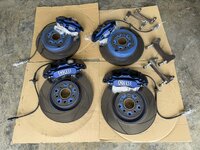
original Endless M4 S2 4pot 2pot brake caliper set...
Started by
david tao
Chassis and Wheels
original rare Yokohama ADVAN Racing RG2 17x8.5jj...
Started by
david tao
Chassis and Wheels
original rare WedsSport TC005 17x7jj offset +40 5H...
Started by
david tao
Chassis and Wheels
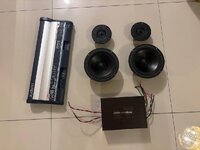
Vifa Speakers Audison Amp
Started by
samuel118
ICE -In Car Entertainment
original rare Yokohama ADVAN Racing RG3 18x8.5...
Started by
david tao
Chassis and Wheels
Carbing R35 GTR GTR35 Brake Master Cylinder Stopper
Started by
aycy
Engine and Performance
GR Corolla Hypertune Bolt On Intercooler
Started by
aycy
Engine and Performance
Carbing Radiator Reservoir Tank Honda Civic Type R FL5
Started by
aycy
Engine and Performance
R35 GTR GTR35 Rim Wheel TE37 Track Edition
Started by
aycy
Chassis and Wheels
Posts refresh every 5 minutes
LF: CT9A rear wiper ( arm)
Dear guys, im looking for the rear wiper ( arm ) as mine was stolen during the break in. been searching but the chances are very low, if anyone comes across or know where its available kindly do PM me or reply. Many...
FS: S15 rear brakes
S15 rear brakes
- calipers
- rotors
- rotor cover
- brake pads
RM 180
Items are in good conditon, taken out from my own car.
PM me for more details. Cheers.
DIY=HID effect
blue paint/spray
skill
and patient and hardwork and soap(to wash hand)
well..firstly,you gotta remove your ligh bulb from your head lamps
and spray them
then....see picture
Recent Posts
Recommendation: Turbocharger for 4B11 N.A engine
Started by
Mitevo7
Car Modification
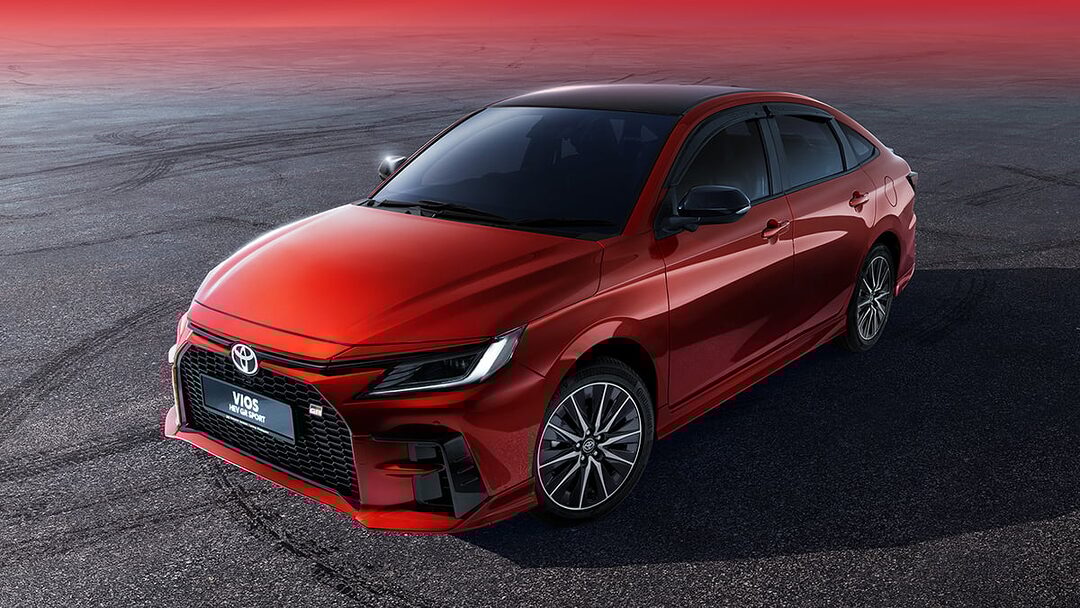
2026 Vios HEV launched with Local Battery Assembly - UMW Toyota Motor
Started by
The_Mechanic
News and Features
SPPF: The Future of Automotive Surface Protection - A Technical Overview
Started by
The_Mechanic
News and Features
Upping Wira 1.5 MMC performance
Started by
Nyfka
Car Modification
Volvo Malaysia Launches Locally Assembled ES90 Electric Sedan
Started by
The_Mechanic
News and Features
Search
Online now
Enjoying Zerotohundred?
Log-in
for an ad-less experience
Home
Forums
Main Forums
Car Talk
Forced Induction & Engine Management
Evo1 speedcut,max boost,plug question.