Menu
Home
Post Something
Forums
Current Activity
New posts
Search forums
What's new
New posts
Latest activity
News & Features
The Marketplace
Cars for Sale
Engine and Performance
Chassis and Wheels
Exterior and Body
Interior and Cockpit
ICE - In Car Entertainment
Car Shops and Services
Toys and Wares
All Other Stuff
Jobs and Vacancies
Looking For
Members
Log in
Register
What's new
Search
Search
Search titles only
By:
Current Activity
New posts
Search forums
Menu
Log in
Register
Reply to thread
See what others are reading now! Try Forums >
Current Activity
Home
Forums
Car Brands
Car Manufacturers
Toyota
Toyota 4A-Engine
JavaScript is disabled. For a better experience, please enable JavaScript in your browser before proceeding.
You are using an out of date browser. It may not display this or other websites correctly.
You should upgrade or use an
alternative browser
.
Message
<blockquote data-quote="eskae92" data-source="post: 2234862" data-attributes="member: 44006"><p><strong>Toyota A engine</strong></p><p></p><p>The A Series Engines<a href="http://en.wikipedia.org/wiki/Image:3-AC.jpg" target="_blank">http://upload.wikimedia.org/wikipedia/en/thumb/d/d4/3-AC.jpg/250px-3-AC.jpg</a><a href="http://en.wikipedia.org/wiki/Automaker" target="_blank"><span style="color: #0000ff">Manufacturer</span></a><a href="http://en.wikipedia.org/wiki/Toyota" target="_blank"><span style="color: #0000ff">Toyota</span></a>The <strong>A Series</strong> engines are a family of <a href="http://en.wikipedia.org/wiki/Straight-4" target="_blank"><span style="color: #0000ff">straight-4</span></a> <a href="http://en.wikipedia.org/wiki/Internal_combustion_engine" target="_blank"><span style="color: #0000ff">internal combustion engines</span></a> with displacement from 1.3 L to 1.8 L produced by <a href="http://en.wikipedia.org/wiki/Toyota_Motor_Corporation" target="_blank"><span style="color: #0000ff">Toyota Motor Corporation</span></a>. The series has cast iron engine blocks and aluminum cylinder heads. The series began in the late 1970s with the <a href="http://en.wikipedia.org/wiki/Toyota_A_engine#1A" target="_blank"><span style="color: #0000ff">1A</span></a>, an <a href="http://en.wikipedia.org/wiki/SOHC" target="_blank"><span style="color: #0000ff">SOHC</span></a> engine with a displacement of 1.5 L. Toyota joint venture partner Tianjin FAW Xiali still produces 1.3 L <a href="http://en.wikipedia.org/wiki/Toyota_A_engine#8A" target="_blank"><span style="color: #0000ff">8A</span></a> and recently restarted production of the <a href="http://en.wikipedia.org/wiki/Toyota_A_engine#5A" target="_blank"><span style="color: #0000ff">5A</span></a>. In between, many interesting variations were produced, including one of the first <a href="http://en.wikipedia.org/wiki/Multi-valve" target="_blank"><span style="color: #0000ff">5-valve</span></a> engines (the <a href="http://en.wikipedia.org/wiki/Toyota_A_engine#4A" target="_blank"><span style="color: #810081">4A</span></a>) and the 170 hp (127 kW) <a href="http://en.wikipedia.org/wiki/Supercharged" target="_blank"><span style="color: #0000ff">supercharged</span></a> <a href="http://en.wikipedia.org/wiki/Toyota_A_engine#4A" target="_blank"><span style="color: #810081">4A-GZE</span></a>.</p><p></p><p><strong>1A</strong></p><p></p><p>The 1.5 L (1452 cc) <strong>1A</strong> was produced in <a href="http://en.wikipedia.org/wiki/1978" target="_blank"><span style="color: #0000ff">1978</span></a> and <a href="http://en.wikipedia.org/wiki/1979" target="_blank"><span style="color: #0000ff">1979</span></a>. It was a 2-valve <a href="http://en.wikipedia.org/wiki/SOHC" target="_blank"><span style="color: #0000ff">SOHC</span></a> engine.</p><p></p><p><strong>2A</strong></p><p></p><p>The 1.3 L (1295 cc) <strong>2A</strong> was produced from <a href="http://en.wikipedia.org/wiki/1979" target="_blank"><span style="color: #0000ff">1979</span></a> through <a href="http://en.wikipedia.org/wiki/1986" target="_blank"><span style="color: #0000ff">1986</span></a>. Cylinder bore was 76 mm (2.99 in) and stroke was 71.4 mm (2.81 in). It was a 2-valve <a href="http://en.wikipedia.org/wiki/SOHC" target="_blank"><span style="color: #0000ff">SOHC</span></a> design like its predecessor.</p><p>Output ranged from 65-75 hp (48-56 kW) at 5400-6000 rpm and 72-79 ft·lbf (97-107 N·m) at 3600 rpm.</p><p></p><p><strong>3A</strong></p><p></p><p>The 1.5 L (1452 cc) <strong>3A</strong> was produced from <a href="http://en.wikipedia.org/wiki/1979" target="_blank"><span style="color: #0000ff">1979</span></a> through <a href="http://en.wikipedia.org/wiki/1988" target="_blank"><span style="color: #0000ff">1988</span></a>. Cylinder bore was 77.5 mm (3.05 in) and stroke was 77 mm (3.3 in). It was a 2-valve <a href="http://en.wikipedia.org/wiki/SOHC" target="_blank"><span style="color: #0000ff">SOHC</span></a> like the 1A and 2A. There were California-spec (<strong>3A-C</strong>), Japan-spec (<strong>3A-U</strong>), <a href="http://en.wikipedia.org/wiki/Transverse_engine" target="_blank"><span style="color: #0000ff">transverse</span></a> (<strong>3A-L</strong>), and swirl-intake (<strong>3A-S</strong>) versions of the same basic design.</p><p>Power output ranged from just 62 hp (46 kW) at 4800 rpm all the way to 90 hp (67 kW) at 6000 rpm. Torque was less spread from 75 ft·lbf (101 N·m) at 2800 rpm to 89 ft·lbf (120 N·m) at 4000 rpm.</p><p></p><p><strong>4A</strong></p><p></p><p>The <strong>4A</strong> was produced from <a href="http://en.wikipedia.org/wiki/1980" target="_blank"><span style="color: #0000ff">1980</span></a> through <a href="http://en.wikipedia.org/wiki/1998" target="_blank"><span style="color: #0000ff">1998</span></a>. All 4A engines have a displacement of 1.6 L (1587 cc). Cylinder bore was enlarged from the previous 3A engines at 81 mm (3.19 in), but stroke remained the same as the 3A at 77 mm (3.03 in).</p><p>Numerous variations of the basic 4A design were produced, from <a href="http://en.wikipedia.org/wiki/SOHC" target="_blank"><span style="color: #0000ff">SOHC</span></a> 2-valve all the way to <a href="http://en.wikipedia.org/wiki/DOHC" target="_blank"><span style="color: #0000ff">DOHC</span></a> <a href="http://en.wikipedia.org/wiki/Multi-valve" target="_blank"><span style="color: #0000ff">5-valve</span></a> versions. Power was also extremely varied, from 70 hp (52 kW) at 4800 rpm in the basic California-spec <strong>4A-C</strong> to 170 hp (127 kW) at 6400 rpm in the <a href="http://en.wikipedia.org/wiki/Supercharged" target="_blank"><span style="color: #0000ff">supercharged</span></a> <strong><a href="http://en.wikipedia.org/wiki/Toyota_A_engine#4A-GZE" target="_blank"><span style="color: #0000ff">4A-GZE</span></a></strong>.</p><p></p><p><strong>4A-C</strong></p><p></p><p>The basic <strong>4A</strong> and Cal-spec <strong>4A-C</strong> was an <a href="http://en.wikipedia.org/wiki/SOHC" target="_blank"><span style="color: #0000ff">SOHC</span></a> 8-valve <a href="http://en.wikipedia.org/wiki/Carburetor" target="_blank"><span style="color: #0000ff">carbureted</span></a> engine, rated at 90 hp (67 kW) at 4800 rpm. Torque was good for a small engine, at 85 ft·lbf (115 N·m) at 2800 rpm in even the "strangled" early-<a href="http://en.wikipedia.org/wiki/1980s" target="_blank"><span style="color: #0000ff">1980s</span></a> California-spec version.</p><p></p><p><strong>4A-E</strong></p><p></p><p><a href="http://en.wikipedia.org/wiki/Fuel_injection" target="_blank"><span style="color: #0000ff">fuel injection</span></a> was added for the <a href="http://en.wikipedia.org/wiki/1981" target="_blank"><span style="color: #0000ff">1981</span></a> through <a href="http://en.wikipedia.org/wiki/1988" target="_blank"><span style="color: #0000ff">1988</span></a> <strong>4A-E</strong>. This pushed output to 78 hp (58 kW) at 5600 rpm and 87 ft·lbf (117 N·m) at 4000 rpm in export form.</p><p>A special Japan-spec transverse <strong>4A-ELU</strong> was also produced in <a href="http://en.wikipedia.org/wiki/1986" target="_blank"><span style="color: #0000ff">1986</span></a>. Output for this engine was 100 hp (75 kW) at 5600 rpm and 101 ft·lbf (136 N·m) at 4000 rpm.</p><p></p><p><strong>4A-F</strong></p><p></p><p>A narrow-valve (22.3°) <a href="http://en.wikipedia.org/wiki/DOHC" target="_blank"><span style="color: #0000ff">DOHC</span></a> <a href="http://en.wikipedia.org/wiki/Multi-valve" target="_blank"><span style="color: #0000ff">4-valve</span></a> <a href="http://en.wikipedia.org/wiki/Carburetor" target="_blank"><span style="color: #0000ff">carb</span></a> version, the <strong>4A-F</strong>, was produced from <a href="http://en.wikipedia.org/wiki/1987" target="_blank"><span style="color: #0000ff">1987</span></a> through <a href="http://en.wikipedia.org/wiki/1990" target="_blank"><span style="color: #0000ff">1990</span></a>. Output was 90 hp (67 kW) at 6000 rpm and 95 ft·lbf (128 N·m) at 3600 rpm. Toyota models that had this engine:</p><ul> <li data-xf-list-type="ul">Corolla AE92 SR5 - FWD</li> <li data-xf-list-type="ul">Corolla AE92 sedan - FWD</li> <li data-xf-list-type="ul">Corolla AE92 Break - FWD</li> </ul><p><strong>4A-FE</strong></p><p></p><p><a href="http://en.wikipedia.org/wiki/Image:4A-FE_2.JPG" target="_blank">http://upload.wikimedia.org/wikipedia/en/thumb/1/1f/4A-FE_2.JPG/250px-4A-FE_2.JPG</a> <a href="http://en.wikipedia.org/wiki/Image:4A-FE_2.JPG" target="_blank">http://en.wikipedia.org/skins-1.5/common/images/magnify-clip.png</a></p><p>4A-FE Engine</p><p></p><p></p><p><a href="http://en.wikipedia.org/wiki/Image:1994_geo_prizm_lsi.jpg" target="_blank">http://upload.wikimedia.org/wikipedia/en/thumb/a/a6/1994_geo_prizm_lsi.jpg/250px-1994_geo_prizm_lsi.jpg</a> <a href="http://en.wikipedia.org/wiki/Image:1994_geo_prizm_lsi.jpg" target="_blank">http://en.wikipedia.org/skins-1.5/common/images/magnify-clip.png</a></p><p>4A-FE Engine</p><p></p><p></p><p><a href="http://en.wikipedia.org/wiki/Image:1994_geo_prizm_sticker.jpg" target="_blank">http://upload.wikimedia.org/wikipedia/en/thumb/9/9d/1994_geo_prizm_sticker.jpg/250px-1994_geo_prizm_sticker.jpg</a> <a href="http://en.wikipedia.org/wiki/Image:1994_geo_prizm_sticker.jpg" target="_blank">http://en.wikipedia.org/skins-1.5/common/images/magnify-clip.png</a></p><p>4A-FE engine sticker</p><p></p><p></p><p>The <a href="http://en.wikipedia.org/wiki/1987" target="_blank"><span style="color: #0000ff">1987</span></a>-<a href="http://en.wikipedia.org/wiki/1998" target="_blank"><span style="color: #0000ff">1998</span></a> <strong>4A-FE</strong> is different from the 4A-GE in terms of performance and power. Although both have the same displacement and are DOHC, they were optimized for different uses. The first obvious difference are the valves, the engine's intake and exhaust valves were placed 22.3° apart (compared to 50° in the G-Engines). The second is that it employed a 'slave cam system', one camshaft's sprocket rotated the other camshaft's sprocket (Both camshaft's sprockets on the G-Engine are rotated by the timing belt). The plus side of this design that it improved fuel efficiency and made the engine very torquey, on the down side it compromises power, about 20% less power compared to the 4A-GE. Power rating varies during certain generations that had the engine.</p><p>Toyota designed this engine with fuel economy in mind. The 4A-FE is basically the same as the <a href="http://en.wikipedia.org/wiki/Toyota_A_engine#4A-F" target="_blank"><span style="color: #0000ff">4A-F</span></a> (introduced in the previous generation of Corollas), the most apparent difference was the fuel delivery system. The 4A-F used a <a href="http://en.wikipedia.org/wiki/Carburetor" target="_blank"><span style="color: #0000ff">carburetor</span></a>, while the 4A-FE used <a href="http://en.wikipedia.org/wiki/Electronic_fuel_injection" target="_blank"><span style="color: #0000ff">electronic fuel injection</span></a> system (notice the 'E'). Also, the 4A-FE had extra power. The engine was succeeded by the <a href="http://en.wikipedia.org/wiki/Toyota_ZZ_engine" target="_blank"><span style="color: #0000ff">3ZZ-FE</span></a>, a 1.6-liter engine with <a href="http://en.wikipedia.org/wiki/VVT-i" target="_blank"><span style="color: #0000ff">VVT-i</span></a> technology.</p><ul> <li data-xf-list-type="ul"><a href="http://en.wikipedia.org/wiki/Engine_displacement" target="_blank"><span style="color: #0000ff">Engine displacement</span></a> - 1.6 <a href="http://en.wikipedia.org/wiki/Liters" target="_blank"><span style="color: #0000ff">liters</span></a> (1587 cc)</li> <li data-xf-list-type="ul">Layout - DOHC Inline-4 (Straight-4)</li> <li data-xf-list-type="ul"><a href="http://en.wikipedia.org/wiki/Valves" target="_blank"><span style="color: #0000ff">Valves</span></a> - 16, 4 for each cylinder</li> <li data-xf-list-type="ul"><a href="http://en.wikipedia.org/wiki/Power_%28physics%29" target="_blank"><span style="color: #0000ff">Power</span></a> - 105 hp (77 kW) @ 5800 rpm<ul> <li data-xf-list-type="ul">also as 114 hp (84 kW) @ 6000 rpm used in Europe E10 1.6 GLI Liftback (only delivered in 1992)</li> </ul></li> <li data-xf-list-type="ul"><a href="http://en.wikipedia.org/wiki/Torque" target="_blank"><span style="color: #0000ff">Torque</span></a> - 101 ft·lbf (137 N·m) @ 4800 rpm</li> <li data-xf-list-type="ul">Redline - 6300 rpm</li> <li data-xf-list-type="ul">Fuel Delivery System - <a href="http://en.wikipedia.org/wiki/Electronic_fuel_injection" target="_blank"><span style="color: #0000ff">MPFI</span></a></li> </ul><p><em>Note - power and torque specs are from the 1988-1992 North American Corollas.</em></p><p>Although not as powerful as the 4A-GE, both engines are renowned for the power they produce from such a low displacement (relative to other engines). Toyota engineers have skillfully optimized the power and torque from its relatively low-displacement engines.</p><p>The engine was used in the <a href="http://en.wikipedia.org/wiki/Toyota_Corolla" target="_blank"><span style="color: #810081">Toyota Corolla</span></a> Sedan from 1988 to 1998 and in the 5th Generation Celica ST models from 1989-1993 both in North America and Europe , as well as the <a href="http://en.wikipedia.org/wiki/Camry" target="_blank"><span style="color: #0000ff">Camry</span></a> from '87 to '91.</p><p></p><p><strong>4A-G (16-valve)</strong></p><p></p><p>The next major modification was the high-performance <strong>4A-G</strong>, with the <a href="http://en.wikipedia.org/wiki/Fuel_injected" target="_blank"><span style="color: #0000ff">fuel injected</span></a> version, the <strong>4A-GE</strong>, being the most powerful. Production of the various models of this version lasted for three generations, from <a href="http://en.wikipedia.org/wiki/1983" target="_blank"><span style="color: #0000ff">1983</span></a> through <a href="http://en.wikipedia.org/wiki/1992" target="_blank"><span style="color: #0000ff">1992</span></a> for most versions, though the <a href="http://en.wikipedia.org/wiki/Multi-valve" target="_blank"><span style="color: #0000ff">5-valve</span></a> <a href="http://en.wikipedia.org/wiki/Toyota_A_engine#20-valve_4A-GE" target="_blank"><span style="color: #0000ff">4A-GE</span></a> lasted through <a href="http://en.wikipedia.org/wiki/1998" target="_blank"><span style="color: #0000ff">1998</span></a>. Most 4A-Gs were <a href="http://en.wikipedia.org/wiki/Multi-valve" target="_blank"><span style="color: #0000ff">4-valve</span></a> <a href="http://en.wikipedia.org/wiki/DOHC" target="_blank"><span style="color: #0000ff">DOHC</span></a> engines with wide (50°) valve spacing for performance.</p><p>The first-generation <strong>4A-GE</strong> replaced the <em><a href="http://en.wikipedia.org/wiki/Toyota_T_engine#2T" target="_blank"><span style="color: #0000ff">2T-G</span></a></em> in most applications. It was extremely light and strong for an all-iron engine block, and production lasted through <a href="http://en.wikipedia.org/wiki/1990" target="_blank"><span style="color: #0000ff">1990</span></a>. The second-generation added piston-cooling oil sprays and higher <a href="http://en.wikipedia.org/wiki/Compression_ratio" target="_blank"><span style="color: #0000ff">compression ratios</span></a>. The third-generation appeared in late <a href="http://en.wikipedia.org/wiki/1991" target="_blank"><span style="color: #0000ff">1991</span></a> with the <a href="http://en.wikipedia.org/wiki/Toyota_A_engine#20_Valve_4A-GE" target="_blank"><span style="color: #0000ff">20 valve 4A-GE</span></a>, which was itself updated in <a href="http://en.wikipedia.org/wiki/1996" target="_blank"><span style="color: #0000ff">1996</span></a> before being retired in <a href="http://en.wikipedia.org/wiki/1998" target="_blank"><span style="color: #0000ff">1998</span></a>.</p><p>Power output for the 4-valve version varied widely, from 112 hp (84 kW) at 6600 rpm to 138 hp (103 kW) at 7200 rpm. Again, torque was closer, varying from 97 ft·lbf (131 N·m) at 4800 rpm to 110 ft·lbf (149 N·m) at 4800 rpm.</p><p>Special versions included the Japan-spec <strong>4A-GEU</strong>, California-spec <strong>4A-GEC</strong>, and even a <a href="http://en.wikipedia.org/wiki/Finland" target="_blank"><span style="color: #0000ff">Finnish</span></a>-spec 4A-GE, as well as the transverse-mounted <strong>4A-GEL</strong>. The engine was used in the company's flagship car, the <a href="http://en.wikipedia.org/wiki/Toyota_Corolla" target="_blank"><span style="color: #810081">Toyota Corolla</span></a>, in the <a href="http://en.wikipedia.org/wiki/1980s" target="_blank"><span style="color: #0000ff">1980s</span></a>.</p><p>The 4A-GE was one of the earliest <a href="http://en.wikipedia.org/wiki/Straight-4" target="_blank"><span style="color: #0000ff">inline-4</span></a> engines to have both <a href="http://en.wikipedia.org/wiki/DOHC" target="_blank"><span style="color: #0000ff">DOHC</span></a> 16 valves and <a href="http://en.wikipedia.org/wiki/Electronic_fuel_injection" target="_blank"><span style="color: #0000ff">electronic fuel injection</span></a> (EFI). Toyota designed this engine with performance in mind; its twin camshafts are 50 degrees apart to allow decent power, but this sacrifices <a href="http://en.wikipedia.org/wiki/Torque" target="_blank"><span style="color: #0000ff">torque</span></a>. This engine is very popular with racers and tuners because of its ease of modification, simple design, and lightness.</p><p>The engine was first introduced in the <a href="http://en.wikipedia.org/wiki/1983" target="_blank"><span style="color: #0000ff">1983</span></a> <a href="http://en.wikipedia.org/wiki/AE86" target="_blank"><span style="color: #0000ff">Sprinter Trueno AE86</span></a> and the <a href="http://en.wikipedia.org/wiki/AE86" target="_blank"><span style="color: #0000ff">Corolla Levin AE86</span></a> sports version. The AE86 marked the end of the 4A-GE as a <a href="http://en.wikipedia.org/wiki/Rear_wheel_drive" target="_blank"><span style="color: #0000ff">rear wheel drive</span></a> (RWD or FR) mounted engine, alongside the RWD AE86/AE85 coupes a <a href="http://en.wikipedia.org/wiki/Front_wheel_drive" target="_blank"><span style="color: #0000ff">front wheel drive</span></a> (FWD or FF) corolla (the AE82) was produced and future corolla/sprinter's were all based around the FF layout. The engine was retired from <a href="http://en.wikipedia.org/wiki/North_America" target="_blank"><span style="color: #0000ff">North American</span></a> Corollas in <a href="http://en.wikipedia.org/wiki/1991" target="_blank"><span style="color: #0000ff">1991</span></a>, although it continued to be available in the <a href="http://en.wikipedia.org/wiki/Geo_Prizm" target="_blank"><span style="color: #0000ff">Geo Prizm</span></a> GSi (sold through Chevrolet dealerships) from 1990-1992.</p><p>Clarification: In the US market, the 4A-GE engine was first used in the 1985 model year Corolla GT-S only, which is identified as an "AE88" in the VIN but uses the AE86 chassis code on the firewall as the AE88 is a "sub" version of the AE86. The 4A-GE engines for the 1985 model year are referred to as "Blue top" as opposed to the later "Red top" engines, because the paint color on the valve covers is different, to show the different engine revision, using different port sizes, different airflow metering, and other minor differences on the engine.</p><p>An AE86 chassis code may be a base model Corolla, or an SR-5, with a 4A-C engine. Only the AE88 version carried the 4A-GE engine and GT-S designations in the US. In other markets, other designations were used. Much confusion exists, even among dealers, as to which models contained what equipment, especially since Toyota split the Corolla line into both RWD and FWD versions, and the GT-S designation was only well known as a Celica version at that time.</p><p>Toyota models that have had this engine:</p><ul> <li data-xf-list-type="ul"><a href="http://en.wikipedia.org/wiki/Toyota_MR2" target="_blank"><span style="color: #0000ff">Toyota MR2</span></a> AW11 - Mid-engine RWD</li> <li data-xf-list-type="ul">Corolla AE88 GT-S - RWD (often referred to as generic AE86 chassis group)</li> <li data-xf-list-type="ul">Corolla AE82 FX-16 - FWD</li> <li data-xf-list-type="ul">Corolla AE92 GT-S - FWD</li> <li data-xf-list-type="ul">SE Sedan (North America): (RWD from 1983-87 and FWD from 1988-91)</li> <li data-xf-list-type="ul">Some Celicas</li> </ul><p>Other models equipped with the 4A-GE:</p><ul> <li data-xf-list-type="ul">Chevrolet Nova (based on Toyota AE82 chassis; 1984-1988-- These 4A-GE cars were exceptionally rare)</li> <li data-xf-list-type="ul"><a href="http://en.wikipedia.org/wiki/Geo_Prizm" target="_blank"><span style="color: #0000ff">Geo Prizm</span></a> GSi (based on Toyota AE92 chassis; 1990-1992)</li> </ul><p>Specifications:</p><ul> <li data-xf-list-type="ul"><a href="http://en.wikipedia.org/wiki/Engine_displacement" target="_blank"><span style="color: #0000ff">Engine displacement</span></a> - 1.6 <a href="http://en.wikipedia.org/wiki/Litre" target="_blank"><span style="color: #0000ff">litres</span></a> (1587 <a href="http://en.wikipedia.org/wiki/Cubic_centimetre" target="_blank"><span style="color: #0000ff">cc</span></a>)</li> <li data-xf-list-type="ul">Layout - DOHC Inline-4 (Straight-4)</li> <li data-xf-list-type="ul"><a href="http://en.wikipedia.org/wiki/Valves" target="_blank"><span style="color: #0000ff">Valves</span></a> - 16, 4 per each cylinder</li> <li data-xf-list-type="ul">Power - 115-140 hp (96-103 kW) @ 6600 <a href="http://en.wikipedia.org/wiki/Revolutions_per_minute" target="_blank"><span style="color: #0000ff">rpm</span></a></li> <li data-xf-list-type="ul"><a href="http://en.wikipedia.org/wiki/Torque" target="_blank"><span style="color: #0000ff">Torque</span></a> - 109 ft·lbf (148 N·m) @ 5800 rpm</li> <li data-xf-list-type="ul">Redline - 7600 rpm</li> <li data-xf-list-type="ul"><a href="http://en.wikipedia.org/w/index.php?title=Fuel_Delivery_System&action=edit" target="_blank"><span style="color: #0000ff">Fuel Delivery System</span></a> - <a href="http://en.wikipedia.org/wiki/Electronic_fuel_injection" target="_blank"><span style="color: #0000ff">MPFI</span></a></li> </ul><p>Toyota sponsored the <a href="http://en.wikipedia.org/wiki/Champ_Car_Atlantic_Championship" target="_blank"><span style="color: #0000ff">Champ Car Atlantic Championship</span></a> from 1990 to 2005. A kit version of the 4A-GE from <a href="http://en.wikipedia.org/wiki/Toyota_Racing_Development" target="_blank"><span style="color: #0000ff">Toyota Racing Development</span></a> was used to power Formula Atlantic cars during this period. This engine used a modified 16-valve head and produced approximately 240 horsepower at 8400 rpm.</p><p></p><p><strong>4A-GZE</strong></p><p></p><p>The <strong>4A-GZE</strong> (produced in various forms from <a href="http://en.wikipedia.org/wiki/1986" target="_blank"><span style="color: #0000ff">1986</span></a> through <a href="http://en.wikipedia.org/wiki/1995" target="_blank"><span style="color: #0000ff">1995</span></a>) was the <a href="http://en.wikipedia.org/wiki/Supercharged" target="_blank"><span style="color: #0000ff">supercharged</span></a> version. Based on the same block and head, the 4A-GZE was equipped with a roots-type supercharger and therefore the compression ratio, valve timing and ports were modified. It was used in the supercharged AW11 <a href="http://en.wikipedia.org/wiki/Toyota_MR2" target="_blank"><span style="color: #0000ff">Toyota MR2</span></a>, rated at 165 hp (124 kW) and 140 ft·lbf (190 N·m). Later versions of this engine are rated 170 hp (127 kW) and 155 ft·lbf (210 N·m) for the AE92 and AE101 <a href="http://en.wikipedia.org/wiki/Toyota_Corolla" target="_blank"><span style="color: #810081">Corolla</span></a>.</p><p></p><p><strong>4A-GE (20-valve)</strong></p><p></p><p><a href="http://en.wikipedia.org/wiki/Image:4A-GE.jpg" target="_blank">http://upload.wikimedia.org/wikipedia/commons/thumb/e/ec/4A-GE.jpg/250px-4A-GE.jpg</a> <a href="http://en.wikipedia.org/wiki/Image:4A-GE.jpg" target="_blank">http://en.wikipedia.org/skins-1.5/common/images/magnify-clip.png</a></p><p>black-top 20 Valve 4A-GELU Engine(Japanese-spec) in 1996 Carina GT</p><p></p><p></p><p>A special 4A-GE was produced from <a href="http://en.wikipedia.org/wiki/1991" target="_blank"><span style="color: #0000ff">1991</span></a> through <a href="http://en.wikipedia.org/wiki/1998" target="_blank"><span style="color: #0000ff">1998</span></a> to replace the 16 valve <a href="http://en.wikipedia.org/wiki/Toyota_A_engine#4A-GE" target="_blank"><span style="color: #0000ff">4A-GE</span></a>. It was a <a href="http://en.wikipedia.org/wiki/Naturally-aspirated" target="_blank"><span style="color: #0000ff">naturally-aspirated</span></a> engine with an additional intake valve for each cylinder, making it one of the first production <a href="http://en.wikipedia.org/wiki/Multi-valve" target="_blank"><span style="color: #0000ff">5-valve</span></a> engines in history. These generation engines also featured quad throttle bodies. The engine can be recognized by its silver or black top. This was the last of the 4A family to be produced. Toyota <a href="http://en.wikipedia.org/wiki/VVT" target="_blank"><span style="color: #0000ff">VVT</span></a> was used for 160–165 hp (123–127 kW) at 7800 rpm and 120 ft·lbf (162 N·m) at 5600 rpm, quite impressive for a naturally-aspirated 1.6 L engine. Note that although VVT was present in the silver top and the black top 4A-GE, VVT-i was not available.</p><p>Some Racing team participating in the Group A of the JGTC, using either the AE101, AE86 or AE82 corollas. These cars used modified silvertop versions of the engine, capable of approximately 240 Horsepower at 11,000 RPM.<a href="http://en.wikipedia.org/wiki/Wikipedia:Citing_sources" target="_blank"><span style="color: #0000ff">[<em>citation needed</em>]</span></a></p><p>Applications:</p><ul> <li data-xf-list-type="ul">1992 <a href="http://en.wikipedia.org/w/index.php?title=Toyota_Corolla_Levin%2C_Sprinter_Trueno&action=edit" target="_blank"><span style="color: #810081">Toyota Corolla Levin, Sprinter Trueno</span></a> <em>AE101</em> (silver-top) All GT models (GT Apex GT-V etc)</li> <li data-xf-list-type="ul">1995 <a href="http://en.wikipedia.org/w/index.php?title=Toyota_Corolla_Levin%2C_Sprinter_Trueno&action=edit" target="_blank"><span style="color: #810081">Toyota Corolla Levin, Sprinter Trueno</span></a> <em>AE111</em> (black-top) All BZ models (BZG, BZR, BZV etc)</li> </ul><p><strong>5A</strong></p><p></p><p>A smaller 1.5 L (1498 cc) <strong>5A-F</strong> was produced in <a href="http://en.wikipedia.org/wiki/1987" target="_blank"><span style="color: #0000ff">1987</span></a> and the <a href="http://en.wikipedia.org/wiki/Fuel_injected" target="_blank"><span style="color: #0000ff">fuel injected</span></a> <strong>5A-FE</strong> was produced that year and again from <a href="http://en.wikipedia.org/wiki/1995" target="_blank"><span style="color: #0000ff">1995</span></a> through <a href="http://en.wikipedia.org/wiki/1998" target="_blank"><span style="color: #0000ff">1998</span></a>. Both used a cylinder bore of 78.7 mm (3.1 in) and a stroke of 77 mm (3.0 in). Both had <a href="http://en.wikipedia.org/wiki/Multi-valve" target="_blank"><span style="color: #0000ff">4 valves per cylinder</span></a> with <a href="http://en.wikipedia.org/wiki/DOHC" target="_blank"><span style="color: #0000ff">DOHC</span></a> heads and used the narrow 22.3° valve angle.</p><p>Toyota joint venture partner Tianjin FAW <a href="http://en.wikipedia.org/wiki/Xiali" target="_blank"><span style="color: #0000ff">Xiali</span></a> now produces the 5A-FE (dubbed 5A+) for its Vela and <a href="http://en.wikipedia.org/w/index.php?title=Weizhi&action=edit" target="_blank"><span style="color: #0000ff">Weizhi</span></a> (C1) subcompact sedans.</p><p>Output for the <a href="http://en.wikipedia.org/wiki/Carburetor" target="_blank"><span style="color: #0000ff">carb</span></a> version was 85 hp (63 kW) at 6000 rpm and 90 ft·lbf (122 N·m) at 3600 rpm. Output for the 1987 FI version was 104 hp (78 kW) at 6000 rpm and 97 ft·lbf (131 N·m) at 4800 rpm. The later one produced 100 hp (75 kW) at 5600 rpm and 102 ft·lbf (138 N·m) @ 4400 rpm. The version now produced by <a href="http://en.wikipedia.org/wiki/Xiali" target="_blank"><span style="color: #0000ff">Xiali</span></a> produces 100 hp (75 kW) at 6000 rpm and 96 ft·lbf (130 N·m) @ 4400 rpm.</p><p></p><p><strong>6A</strong></p><p></p><p>The 1.4 L (1397 cc) <strong>6A-FC</strong> was the only 1.4 variant, produced from <a href="http://en.wikipedia.org/wiki/1989" target="_blank"><span style="color: #0000ff">1989</span></a> through <a href="http://en.wikipedia.org/wiki/1992" target="_blank"><span style="color: #0000ff">1992</span></a>. Output was 82 hp (61 kW) at rpm and 87 ft·lbf (117 N·m) at rpm. Cylinder bore was 76 mm (3 in) and stroke was 77 mm (3.03 in) for this <a href="http://en.wikipedia.org/wiki/Multi-valve" target="_blank"><span style="color: #0000ff">4-valve</span></a> <a href="http://en.wikipedia.org/wiki/DOHC" target="_blank"><span style="color: #0000ff">DOHC</span></a> engine.</p><p></p><p><strong>7A</strong></p><p></p><p>The largest A-series engine was the 1.8 L (1762 cc) <strong>7A-FE</strong>. Produced from <a href="http://en.wikipedia.org/wiki/1993" target="_blank"><span style="color: #0000ff">1993</span></a> to <a href="http://en.wikipedia.org/wiki/1998" target="_blank"><span style="color: #0000ff">1998</span></a>, it was a <a href="http://en.wikipedia.org/wiki/Multi-valve" target="_blank"><span style="color: #0000ff">4-valve</span></a> <a href="http://en.wikipedia.org/wiki/DOHC" target="_blank"><span style="color: #0000ff">DOHC</span></a> narrow-valve-angle economy engine. Cylinder bore was 81 mm (3.19 in) and stroke was 85.5 mm (3.37 in).</p><p>An early Canadian version produced 115 hp (86 kW) at 5600 rpm and 110 ft·lbf (149 N·m) at 2800 rpm. The most common version is rated at 115 hp (86 kW) at 5600 rpm and 115 ft·lbf (155 N·m) at 2800 rpm engine.</p><p>In the United States, the 7A-FE's most common application was in the 1993–1997 <a href="http://en.wikipedia.org/wiki/Toyota_Corolla" target="_blank"><span style="color: #810081">Toyota Corolla</span></a> (7th generation). The engine was also used in some 1994–1999 <a href="http://en.wikipedia.org/wiki/Toyota_Celica" target="_blank"><span style="color: #0000ff">Toyota Celicas</span></a> (6th generation) at the base ST trim level, as well as the Toyota Corolla's clone, the <a href="http://en.wikipedia.org/wiki/Geo_Prizm" target="_blank"><span style="color: #0000ff">Geo Prizm</span></a>.</p><p>Since the 7A shares the same layout as the 4A it is possible to create a 7A-G(Z)E out of a 7A-FE bottom and a 4A-G(Z)E head. Since the 7A is a very common engine the upgrade from 4A-G(Z)E to 7A-G(Z)E should be relatively cheap. This is a popular upgrade amongst drifters (mostly <a href="http://en.wikipedia.org/wiki/Toyota_AE86" target="_blank"><span style="color: #0000ff">AE86</span></a> drivers) who are always in need of more torque.</p><p>The Indonesian and Russian version of 7A-FE has strongest output, 120 hp (89 kW) at 6000 rpm and 16 kgf·m (157 N·m) at 4400 rpm, with 9.5 compression ratio. It appears in the 8th generation Corolla (AE112).</p><p>It is a noninterference type engine.</p><p></p><p><strong>8A</strong></p><p></p><p>A 1.3 L (1342 cc) <strong>8A</strong> is now produced by Tianjin FAW <a href="http://en.wikipedia.org/wiki/Xiali" target="_blank"><span style="color: #0000ff">Xiali</span></a> for its <a href="http://en.wikipedia.org/wiki/Daihatsu" target="_blank"><span style="color: #0000ff">Daihatsu</span></a> and <a href="http://en.wikipedia.org/wiki/Toyota" target="_blank"><span style="color: #0000ff">Toyota</span></a>-based <a href="http://en.wikipedia.org/wiki/Subcompacts" target="_blank"><span style="color: #0000ff">subcompacts</span></a>. It uses the same cylinder bore of 78.7 mm (3.1 in) as the 5A with a reduced stroke of 69 mm (2.7 in) and a <a href="http://en.wikipedia.org/wiki/Multi-valve" target="_blank"><span style="color: #0000ff">4 valves per cylinder</span></a> <a href="http://en.wikipedia.org/wiki/DOHC" target="_blank"><span style="color: #0000ff">DOHC</span></a> head.</p><p>Output is 86 hp (64 kW) at 6000 rpm and 81 ft·lbf (110 N·m) @ 5200 rpm.</p></blockquote><p></p>
[QUOTE="eskae92, post: 2234862, member: 44006"] [B]Toyota A engine[/B] The A Series Engines[URL="http://en.wikipedia.org/wiki/Image:3-AC.jpg"]http://upload.wikimedia.org/wikipedia/en/thumb/d/d4/3-AC.jpg/250px-3-AC.jpg[/URL][URL="http://en.wikipedia.org/wiki/Automaker"][COLOR=#0000ff]Manufacturer[/COLOR][/URL][URL="http://en.wikipedia.org/wiki/Toyota"][COLOR=#0000ff]Toyota[/COLOR][/URL]The [B]A Series[/B] engines are a family of [URL="http://en.wikipedia.org/wiki/Straight-4"][COLOR=#0000ff]straight-4[/COLOR][/URL] [URL="http://en.wikipedia.org/wiki/Internal_combustion_engine"][COLOR=#0000ff]internal combustion engines[/COLOR][/URL] with displacement from 1.3 L to 1.8 L produced by [URL="http://en.wikipedia.org/wiki/Toyota_Motor_Corporation"][COLOR=#0000ff]Toyota Motor Corporation[/COLOR][/URL]. The series has cast iron engine blocks and aluminum cylinder heads. The series began in the late 1970s with the [URL="http://en.wikipedia.org/wiki/Toyota_A_engine#1A"][COLOR=#0000ff]1A[/COLOR][/URL], an [URL="http://en.wikipedia.org/wiki/SOHC"][COLOR=#0000ff]SOHC[/COLOR][/URL] engine with a displacement of 1.5 L. Toyota joint venture partner Tianjin FAW Xiali still produces 1.3 L [URL="http://en.wikipedia.org/wiki/Toyota_A_engine#8A"][COLOR=#0000ff]8A[/COLOR][/URL] and recently restarted production of the [URL="http://en.wikipedia.org/wiki/Toyota_A_engine#5A"][COLOR=#0000ff]5A[/COLOR][/URL]. In between, many interesting variations were produced, including one of the first [URL="http://en.wikipedia.org/wiki/Multi-valve"][COLOR=#0000ff]5-valve[/COLOR][/URL] engines (the [URL="http://en.wikipedia.org/wiki/Toyota_A_engine#4A"][COLOR=#810081]4A[/COLOR][/URL]) and the 170 hp (127 kW) [URL="http://en.wikipedia.org/wiki/Supercharged"][COLOR=#0000ff]supercharged[/COLOR][/URL] [URL="http://en.wikipedia.org/wiki/Toyota_A_engine#4A"][COLOR=#810081]4A-GZE[/COLOR][/URL]. [B]1A[/B] The 1.5 L (1452 cc) [B]1A[/B] was produced in [URL="http://en.wikipedia.org/wiki/1978"][COLOR=#0000ff]1978[/COLOR][/URL] and [URL="http://en.wikipedia.org/wiki/1979"][COLOR=#0000ff]1979[/COLOR][/URL]. It was a 2-valve [URL="http://en.wikipedia.org/wiki/SOHC"][COLOR=#0000ff]SOHC[/COLOR][/URL] engine. [B]2A[/B] The 1.3 L (1295 cc) [B]2A[/B] was produced from [URL="http://en.wikipedia.org/wiki/1979"][COLOR=#0000ff]1979[/COLOR][/URL] through [URL="http://en.wikipedia.org/wiki/1986"][COLOR=#0000ff]1986[/COLOR][/URL]. Cylinder bore was 76 mm (2.99 in) and stroke was 71.4 mm (2.81 in). It was a 2-valve [URL="http://en.wikipedia.org/wiki/SOHC"][COLOR=#0000ff]SOHC[/COLOR][/URL] design like its predecessor. Output ranged from 65-75 hp (48-56 kW) at 5400-6000 rpm and 72-79 ft·lbf (97-107 N·m) at 3600 rpm. [B]3A[/B] The 1.5 L (1452 cc) [B]3A[/B] was produced from [URL="http://en.wikipedia.org/wiki/1979"][COLOR=#0000ff]1979[/COLOR][/URL] through [URL="http://en.wikipedia.org/wiki/1988"][COLOR=#0000ff]1988[/COLOR][/URL]. Cylinder bore was 77.5 mm (3.05 in) and stroke was 77 mm (3.3 in). It was a 2-valve [URL="http://en.wikipedia.org/wiki/SOHC"][COLOR=#0000ff]SOHC[/COLOR][/URL] like the 1A and 2A. There were California-spec ([B]3A-C[/B]), Japan-spec ([B]3A-U[/B]), [URL="http://en.wikipedia.org/wiki/Transverse_engine"][COLOR=#0000ff]transverse[/COLOR][/URL] ([B]3A-L[/B]), and swirl-intake ([B]3A-S[/B]) versions of the same basic design. Power output ranged from just 62 hp (46 kW) at 4800 rpm all the way to 90 hp (67 kW) at 6000 rpm. Torque was less spread from 75 ft·lbf (101 N·m) at 2800 rpm to 89 ft·lbf (120 N·m) at 4000 rpm. [B]4A[/B] The [B]4A[/B] was produced from [URL="http://en.wikipedia.org/wiki/1980"][COLOR=#0000ff]1980[/COLOR][/URL] through [URL="http://en.wikipedia.org/wiki/1998"][COLOR=#0000ff]1998[/COLOR][/URL]. All 4A engines have a displacement of 1.6 L (1587 cc). Cylinder bore was enlarged from the previous 3A engines at 81 mm (3.19 in), but stroke remained the same as the 3A at 77 mm (3.03 in). Numerous variations of the basic 4A design were produced, from [URL="http://en.wikipedia.org/wiki/SOHC"][COLOR=#0000ff]SOHC[/COLOR][/URL] 2-valve all the way to [URL="http://en.wikipedia.org/wiki/DOHC"][COLOR=#0000ff]DOHC[/COLOR][/URL] [URL="http://en.wikipedia.org/wiki/Multi-valve"][COLOR=#0000ff]5-valve[/COLOR][/URL] versions. Power was also extremely varied, from 70 hp (52 kW) at 4800 rpm in the basic California-spec [B]4A-C[/B] to 170 hp (127 kW) at 6400 rpm in the [URL="http://en.wikipedia.org/wiki/Supercharged"][COLOR=#0000ff]supercharged[/COLOR][/URL] [B][URL="http://en.wikipedia.org/wiki/Toyota_A_engine#4A-GZE"][COLOR=#0000ff]4A-GZE[/COLOR][/URL][/B]. [B]4A-C[/B] The basic [B]4A[/B] and Cal-spec [B]4A-C[/B] was an [URL="http://en.wikipedia.org/wiki/SOHC"][COLOR=#0000ff]SOHC[/COLOR][/URL] 8-valve [URL="http://en.wikipedia.org/wiki/Carburetor"][COLOR=#0000ff]carbureted[/COLOR][/URL] engine, rated at 90 hp (67 kW) at 4800 rpm. Torque was good for a small engine, at 85 ft·lbf (115 N·m) at 2800 rpm in even the "strangled" early-[URL="http://en.wikipedia.org/wiki/1980s"][COLOR=#0000ff]1980s[/COLOR][/URL] California-spec version. [B]4A-E[/B] [URL="http://en.wikipedia.org/wiki/Fuel_injection"][COLOR=#0000ff]fuel injection[/COLOR][/URL] was added for the [URL="http://en.wikipedia.org/wiki/1981"][COLOR=#0000ff]1981[/COLOR][/URL] through [URL="http://en.wikipedia.org/wiki/1988"][COLOR=#0000ff]1988[/COLOR][/URL] [B]4A-E[/B]. This pushed output to 78 hp (58 kW) at 5600 rpm and 87 ft·lbf (117 N·m) at 4000 rpm in export form. A special Japan-spec transverse [B]4A-ELU[/B] was also produced in [URL="http://en.wikipedia.org/wiki/1986"][COLOR=#0000ff]1986[/COLOR][/URL]. Output for this engine was 100 hp (75 kW) at 5600 rpm and 101 ft·lbf (136 N·m) at 4000 rpm. [B]4A-F[/B] A narrow-valve (22.3°) [URL="http://en.wikipedia.org/wiki/DOHC"][COLOR=#0000ff]DOHC[/COLOR][/URL] [URL="http://en.wikipedia.org/wiki/Multi-valve"][COLOR=#0000ff]4-valve[/COLOR][/URL] [URL="http://en.wikipedia.org/wiki/Carburetor"][COLOR=#0000ff]carb[/COLOR][/URL] version, the [B]4A-F[/B], was produced from [URL="http://en.wikipedia.org/wiki/1987"][COLOR=#0000ff]1987[/COLOR][/URL] through [URL="http://en.wikipedia.org/wiki/1990"][COLOR=#0000ff]1990[/COLOR][/URL]. Output was 90 hp (67 kW) at 6000 rpm and 95 ft·lbf (128 N·m) at 3600 rpm. Toyota models that had this engine: [LIST] [*]Corolla AE92 SR5 - FWD [*]Corolla AE92 sedan - FWD [*]Corolla AE92 Break - FWD[/LIST][B]4A-FE[/B] [URL="http://en.wikipedia.org/wiki/Image:4A-FE_2.JPG"]http://upload.wikimedia.org/wikipedia/en/thumb/1/1f/4A-FE_2.JPG/250px-4A-FE_2.JPG[/URL] [URL="http://en.wikipedia.org/wiki/Image:4A-FE_2.JPG"]http://en.wikipedia.org/skins-1.5/common/images/magnify-clip.png[/URL] 4A-FE Engine [URL="http://en.wikipedia.org/wiki/Image:1994_geo_prizm_lsi.jpg"]http://upload.wikimedia.org/wikipedia/en/thumb/a/a6/1994_geo_prizm_lsi.jpg/250px-1994_geo_prizm_lsi.jpg[/URL] [URL="http://en.wikipedia.org/wiki/Image:1994_geo_prizm_lsi.jpg"]http://en.wikipedia.org/skins-1.5/common/images/magnify-clip.png[/URL] 4A-FE Engine [URL="http://en.wikipedia.org/wiki/Image:1994_geo_prizm_sticker.jpg"]http://upload.wikimedia.org/wikipedia/en/thumb/9/9d/1994_geo_prizm_sticker.jpg/250px-1994_geo_prizm_sticker.jpg[/URL] [URL="http://en.wikipedia.org/wiki/Image:1994_geo_prizm_sticker.jpg"]http://en.wikipedia.org/skins-1.5/common/images/magnify-clip.png[/URL] 4A-FE engine sticker The [URL="http://en.wikipedia.org/wiki/1987"][COLOR=#0000ff]1987[/COLOR][/URL]-[URL="http://en.wikipedia.org/wiki/1998"][COLOR=#0000ff]1998[/COLOR][/URL] [B]4A-FE[/B] is different from the 4A-GE in terms of performance and power. Although both have the same displacement and are DOHC, they were optimized for different uses. The first obvious difference are the valves, the engine's intake and exhaust valves were placed 22.3° apart (compared to 50° in the G-Engines). The second is that it employed a 'slave cam system', one camshaft's sprocket rotated the other camshaft's sprocket (Both camshaft's sprockets on the G-Engine are rotated by the timing belt). The plus side of this design that it improved fuel efficiency and made the engine very torquey, on the down side it compromises power, about 20% less power compared to the 4A-GE. Power rating varies during certain generations that had the engine. Toyota designed this engine with fuel economy in mind. The 4A-FE is basically the same as the [URL="http://en.wikipedia.org/wiki/Toyota_A_engine#4A-F"][COLOR=#0000ff]4A-F[/COLOR][/URL] (introduced in the previous generation of Corollas), the most apparent difference was the fuel delivery system. The 4A-F used a [URL="http://en.wikipedia.org/wiki/Carburetor"][COLOR=#0000ff]carburetor[/COLOR][/URL], while the 4A-FE used [URL="http://en.wikipedia.org/wiki/Electronic_fuel_injection"][COLOR=#0000ff]electronic fuel injection[/COLOR][/URL] system (notice the 'E'). Also, the 4A-FE had extra power. The engine was succeeded by the [URL="http://en.wikipedia.org/wiki/Toyota_ZZ_engine"][COLOR=#0000ff]3ZZ-FE[/COLOR][/URL], a 1.6-liter engine with [URL="http://en.wikipedia.org/wiki/VVT-i"][COLOR=#0000ff]VVT-i[/COLOR][/URL] technology. [LIST] [*][URL="http://en.wikipedia.org/wiki/Engine_displacement"][COLOR=#0000ff]Engine displacement[/COLOR][/URL] - 1.6 [URL="http://en.wikipedia.org/wiki/Liters"][COLOR=#0000ff]liters[/COLOR][/URL] (1587 cc) [*]Layout - DOHC Inline-4 (Straight-4) [*][URL="http://en.wikipedia.org/wiki/Valves"][COLOR=#0000ff]Valves[/COLOR][/URL] - 16, 4 for each cylinder [*][URL="http://en.wikipedia.org/wiki/Power_%28physics%29"][COLOR=#0000ff]Power[/COLOR][/URL] - 105 hp (77 kW) @ 5800 rpm[LIST] [*]also as 114 hp (84 kW) @ 6000 rpm used in Europe E10 1.6 GLI Liftback (only delivered in 1992)[/LIST] [*][URL="http://en.wikipedia.org/wiki/Torque"][COLOR=#0000ff]Torque[/COLOR][/URL] - 101 ft·lbf (137 N·m) @ 4800 rpm [*]Redline - 6300 rpm [*]Fuel Delivery System - [URL="http://en.wikipedia.org/wiki/Electronic_fuel_injection"][COLOR=#0000ff]MPFI[/COLOR][/URL][/LIST][I]Note - power and torque specs are from the 1988-1992 North American Corollas.[/I] Although not as powerful as the 4A-GE, both engines are renowned for the power they produce from such a low displacement (relative to other engines). Toyota engineers have skillfully optimized the power and torque from its relatively low-displacement engines. The engine was used in the [URL="http://en.wikipedia.org/wiki/Toyota_Corolla"][COLOR=#810081]Toyota Corolla[/COLOR][/URL] Sedan from 1988 to 1998 and in the 5th Generation Celica ST models from 1989-1993 both in North America and Europe , as well as the [URL="http://en.wikipedia.org/wiki/Camry"][COLOR=#0000ff]Camry[/COLOR][/URL] from '87 to '91. [B]4A-G (16-valve)[/B] The next major modification was the high-performance [B]4A-G[/B], with the [URL="http://en.wikipedia.org/wiki/Fuel_injected"][COLOR=#0000ff]fuel injected[/COLOR][/URL] version, the [B]4A-GE[/B], being the most powerful. Production of the various models of this version lasted for three generations, from [URL="http://en.wikipedia.org/wiki/1983"][COLOR=#0000ff]1983[/COLOR][/URL] through [URL="http://en.wikipedia.org/wiki/1992"][COLOR=#0000ff]1992[/COLOR][/URL] for most versions, though the [URL="http://en.wikipedia.org/wiki/Multi-valve"][COLOR=#0000ff]5-valve[/COLOR][/URL] [URL="http://en.wikipedia.org/wiki/Toyota_A_engine#20-valve_4A-GE"][COLOR=#0000ff]4A-GE[/COLOR][/URL] lasted through [URL="http://en.wikipedia.org/wiki/1998"][COLOR=#0000ff]1998[/COLOR][/URL]. Most 4A-Gs were [URL="http://en.wikipedia.org/wiki/Multi-valve"][COLOR=#0000ff]4-valve[/COLOR][/URL] [URL="http://en.wikipedia.org/wiki/DOHC"][COLOR=#0000ff]DOHC[/COLOR][/URL] engines with wide (50°) valve spacing for performance. The first-generation [B]4A-GE[/B] replaced the [I][URL="http://en.wikipedia.org/wiki/Toyota_T_engine#2T"][COLOR=#0000ff]2T-G[/COLOR][/URL][/I] in most applications. It was extremely light and strong for an all-iron engine block, and production lasted through [URL="http://en.wikipedia.org/wiki/1990"][COLOR=#0000ff]1990[/COLOR][/URL]. The second-generation added piston-cooling oil sprays and higher [URL="http://en.wikipedia.org/wiki/Compression_ratio"][COLOR=#0000ff]compression ratios[/COLOR][/URL]. The third-generation appeared in late [URL="http://en.wikipedia.org/wiki/1991"][COLOR=#0000ff]1991[/COLOR][/URL] with the [URL="http://en.wikipedia.org/wiki/Toyota_A_engine#20_Valve_4A-GE"][COLOR=#0000ff]20 valve 4A-GE[/COLOR][/URL], which was itself updated in [URL="http://en.wikipedia.org/wiki/1996"][COLOR=#0000ff]1996[/COLOR][/URL] before being retired in [URL="http://en.wikipedia.org/wiki/1998"][COLOR=#0000ff]1998[/COLOR][/URL]. Power output for the 4-valve version varied widely, from 112 hp (84 kW) at 6600 rpm to 138 hp (103 kW) at 7200 rpm. Again, torque was closer, varying from 97 ft·lbf (131 N·m) at 4800 rpm to 110 ft·lbf (149 N·m) at 4800 rpm. Special versions included the Japan-spec [B]4A-GEU[/B], California-spec [B]4A-GEC[/B], and even a [URL="http://en.wikipedia.org/wiki/Finland"][COLOR=#0000ff]Finnish[/COLOR][/URL]-spec 4A-GE, as well as the transverse-mounted [B]4A-GEL[/B]. The engine was used in the company's flagship car, the [URL="http://en.wikipedia.org/wiki/Toyota_Corolla"][COLOR=#810081]Toyota Corolla[/COLOR][/URL], in the [URL="http://en.wikipedia.org/wiki/1980s"][COLOR=#0000ff]1980s[/COLOR][/URL]. The 4A-GE was one of the earliest [URL="http://en.wikipedia.org/wiki/Straight-4"][COLOR=#0000ff]inline-4[/COLOR][/URL] engines to have both [URL="http://en.wikipedia.org/wiki/DOHC"][COLOR=#0000ff]DOHC[/COLOR][/URL] 16 valves and [URL="http://en.wikipedia.org/wiki/Electronic_fuel_injection"][COLOR=#0000ff]electronic fuel injection[/COLOR][/URL] (EFI). Toyota designed this engine with performance in mind; its twin camshafts are 50 degrees apart to allow decent power, but this sacrifices [URL="http://en.wikipedia.org/wiki/Torque"][COLOR=#0000ff]torque[/COLOR][/URL]. This engine is very popular with racers and tuners because of its ease of modification, simple design, and lightness. The engine was first introduced in the [URL="http://en.wikipedia.org/wiki/1983"][COLOR=#0000ff]1983[/COLOR][/URL] [URL="http://en.wikipedia.org/wiki/AE86"][COLOR=#0000ff]Sprinter Trueno AE86[/COLOR][/URL] and the [URL="http://en.wikipedia.org/wiki/AE86"][COLOR=#0000ff]Corolla Levin AE86[/COLOR][/URL] sports version. The AE86 marked the end of the 4A-GE as a [URL="http://en.wikipedia.org/wiki/Rear_wheel_drive"][COLOR=#0000ff]rear wheel drive[/COLOR][/URL] (RWD or FR) mounted engine, alongside the RWD AE86/AE85 coupes a [URL="http://en.wikipedia.org/wiki/Front_wheel_drive"][COLOR=#0000ff]front wheel drive[/COLOR][/URL] (FWD or FF) corolla (the AE82) was produced and future corolla/sprinter's were all based around the FF layout. The engine was retired from [URL="http://en.wikipedia.org/wiki/North_America"][COLOR=#0000ff]North American[/COLOR][/URL] Corollas in [URL="http://en.wikipedia.org/wiki/1991"][COLOR=#0000ff]1991[/COLOR][/URL], although it continued to be available in the [URL="http://en.wikipedia.org/wiki/Geo_Prizm"][COLOR=#0000ff]Geo Prizm[/COLOR][/URL] GSi (sold through Chevrolet dealerships) from 1990-1992. Clarification: In the US market, the 4A-GE engine was first used in the 1985 model year Corolla GT-S only, which is identified as an "AE88" in the VIN but uses the AE86 chassis code on the firewall as the AE88 is a "sub" version of the AE86. The 4A-GE engines for the 1985 model year are referred to as "Blue top" as opposed to the later "Red top" engines, because the paint color on the valve covers is different, to show the different engine revision, using different port sizes, different airflow metering, and other minor differences on the engine. An AE86 chassis code may be a base model Corolla, or an SR-5, with a 4A-C engine. Only the AE88 version carried the 4A-GE engine and GT-S designations in the US. In other markets, other designations were used. Much confusion exists, even among dealers, as to which models contained what equipment, especially since Toyota split the Corolla line into both RWD and FWD versions, and the GT-S designation was only well known as a Celica version at that time. Toyota models that have had this engine: [LIST] [*][URL="http://en.wikipedia.org/wiki/Toyota_MR2"][COLOR=#0000ff]Toyota MR2[/COLOR][/URL] AW11 - Mid-engine RWD [*]Corolla AE88 GT-S - RWD (often referred to as generic AE86 chassis group) [*]Corolla AE82 FX-16 - FWD [*]Corolla AE92 GT-S - FWD [*]SE Sedan (North America): (RWD from 1983-87 and FWD from 1988-91) [*]Some Celicas[/LIST]Other models equipped with the 4A-GE: [LIST] [*]Chevrolet Nova (based on Toyota AE82 chassis; 1984-1988-- These 4A-GE cars were exceptionally rare) [*][URL="http://en.wikipedia.org/wiki/Geo_Prizm"][COLOR=#0000ff]Geo Prizm[/COLOR][/URL] GSi (based on Toyota AE92 chassis; 1990-1992)[/LIST]Specifications: [LIST] [*][URL="http://en.wikipedia.org/wiki/Engine_displacement"][COLOR=#0000ff]Engine displacement[/COLOR][/URL] - 1.6 [URL="http://en.wikipedia.org/wiki/Litre"][COLOR=#0000ff]litres[/COLOR][/URL] (1587 [URL="http://en.wikipedia.org/wiki/Cubic_centimetre"][COLOR=#0000ff]cc[/COLOR][/URL]) [*]Layout - DOHC Inline-4 (Straight-4) [*][URL="http://en.wikipedia.org/wiki/Valves"][COLOR=#0000ff]Valves[/COLOR][/URL] - 16, 4 per each cylinder [*]Power - 115-140 hp (96-103 kW) @ 6600 [URL="http://en.wikipedia.org/wiki/Revolutions_per_minute"][COLOR=#0000ff]rpm[/COLOR][/URL] [*][URL="http://en.wikipedia.org/wiki/Torque"][COLOR=#0000ff]Torque[/COLOR][/URL] - 109 ft·lbf (148 N·m) @ 5800 rpm [*]Redline - 7600 rpm [*][URL="http://en.wikipedia.org/w/index.php?title=Fuel_Delivery_System&action=edit"][COLOR=#0000ff]Fuel Delivery System[/COLOR][/URL] - [URL="http://en.wikipedia.org/wiki/Electronic_fuel_injection"][COLOR=#0000ff]MPFI[/COLOR][/URL][/LIST]Toyota sponsored the [URL="http://en.wikipedia.org/wiki/Champ_Car_Atlantic_Championship"][COLOR=#0000ff]Champ Car Atlantic Championship[/COLOR][/URL] from 1990 to 2005. A kit version of the 4A-GE from [URL="http://en.wikipedia.org/wiki/Toyota_Racing_Development"][COLOR=#0000ff]Toyota Racing Development[/COLOR][/URL] was used to power Formula Atlantic cars during this period. This engine used a modified 16-valve head and produced approximately 240 horsepower at 8400 rpm. [B]4A-GZE[/B] The [B]4A-GZE[/B] (produced in various forms from [URL="http://en.wikipedia.org/wiki/1986"][COLOR=#0000ff]1986[/COLOR][/URL] through [URL="http://en.wikipedia.org/wiki/1995"][COLOR=#0000ff]1995[/COLOR][/URL]) was the [URL="http://en.wikipedia.org/wiki/Supercharged"][COLOR=#0000ff]supercharged[/COLOR][/URL] version. Based on the same block and head, the 4A-GZE was equipped with a roots-type supercharger and therefore the compression ratio, valve timing and ports were modified. It was used in the supercharged AW11 [URL="http://en.wikipedia.org/wiki/Toyota_MR2"][COLOR=#0000ff]Toyota MR2[/COLOR][/URL], rated at 165 hp (124 kW) and 140 ft·lbf (190 N·m). Later versions of this engine are rated 170 hp (127 kW) and 155 ft·lbf (210 N·m) for the AE92 and AE101 [URL="http://en.wikipedia.org/wiki/Toyota_Corolla"][COLOR=#810081]Corolla[/COLOR][/URL]. [B]4A-GE (20-valve)[/B] [URL="http://en.wikipedia.org/wiki/Image:4A-GE.jpg"]http://upload.wikimedia.org/wikipedia/commons/thumb/e/ec/4A-GE.jpg/250px-4A-GE.jpg[/URL] [URL="http://en.wikipedia.org/wiki/Image:4A-GE.jpg"]http://en.wikipedia.org/skins-1.5/common/images/magnify-clip.png[/URL] black-top 20 Valve 4A-GELU Engine(Japanese-spec) in 1996 Carina GT A special 4A-GE was produced from [URL="http://en.wikipedia.org/wiki/1991"][COLOR=#0000ff]1991[/COLOR][/URL] through [URL="http://en.wikipedia.org/wiki/1998"][COLOR=#0000ff]1998[/COLOR][/URL] to replace the 16 valve [URL="http://en.wikipedia.org/wiki/Toyota_A_engine#4A-GE"][COLOR=#0000ff]4A-GE[/COLOR][/URL]. It was a [URL="http://en.wikipedia.org/wiki/Naturally-aspirated"][COLOR=#0000ff]naturally-aspirated[/COLOR][/URL] engine with an additional intake valve for each cylinder, making it one of the first production [URL="http://en.wikipedia.org/wiki/Multi-valve"][COLOR=#0000ff]5-valve[/COLOR][/URL] engines in history. These generation engines also featured quad throttle bodies. The engine can be recognized by its silver or black top. This was the last of the 4A family to be produced. Toyota [URL="http://en.wikipedia.org/wiki/VVT"][COLOR=#0000ff]VVT[/COLOR][/URL] was used for 160–165 hp (123–127 kW) at 7800 rpm and 120 ft·lbf (162 N·m) at 5600 rpm, quite impressive for a naturally-aspirated 1.6 L engine. Note that although VVT was present in the silver top and the black top 4A-GE, VVT-i was not available. Some Racing team participating in the Group A of the JGTC, using either the AE101, AE86 or AE82 corollas. These cars used modified silvertop versions of the engine, capable of approximately 240 Horsepower at 11,000 RPM.[URL="http://en.wikipedia.org/wiki/Wikipedia:Citing_sources"][COLOR=#0000ff][[I]citation needed[/I]][/COLOR][/URL] Applications: [LIST] [*]1992 [URL="http://en.wikipedia.org/w/index.php?title=Toyota_Corolla_Levin%2C_Sprinter_Trueno&action=edit"][COLOR=#810081]Toyota Corolla Levin, Sprinter Trueno[/COLOR][/URL] [I]AE101[/I] (silver-top) All GT models (GT Apex GT-V etc) [*]1995 [URL="http://en.wikipedia.org/w/index.php?title=Toyota_Corolla_Levin%2C_Sprinter_Trueno&action=edit"][COLOR=#810081]Toyota Corolla Levin, Sprinter Trueno[/COLOR][/URL] [I]AE111[/I] (black-top) All BZ models (BZG, BZR, BZV etc)[/LIST] [B]5A[/B] A smaller 1.5 L (1498 cc) [B]5A-F[/B] was produced in [URL="http://en.wikipedia.org/wiki/1987"][COLOR=#0000ff]1987[/COLOR][/URL] and the [URL="http://en.wikipedia.org/wiki/Fuel_injected"][COLOR=#0000ff]fuel injected[/COLOR][/URL] [B]5A-FE[/B] was produced that year and again from [URL="http://en.wikipedia.org/wiki/1995"][COLOR=#0000ff]1995[/COLOR][/URL] through [URL="http://en.wikipedia.org/wiki/1998"][COLOR=#0000ff]1998[/COLOR][/URL]. Both used a cylinder bore of 78.7 mm (3.1 in) and a stroke of 77 mm (3.0 in). Both had [URL="http://en.wikipedia.org/wiki/Multi-valve"][COLOR=#0000ff]4 valves per cylinder[/COLOR][/URL] with [URL="http://en.wikipedia.org/wiki/DOHC"][COLOR=#0000ff]DOHC[/COLOR][/URL] heads and used the narrow 22.3° valve angle. Toyota joint venture partner Tianjin FAW [URL="http://en.wikipedia.org/wiki/Xiali"][COLOR=#0000ff]Xiali[/COLOR][/URL] now produces the 5A-FE (dubbed 5A+) for its Vela and [URL="http://en.wikipedia.org/w/index.php?title=Weizhi&action=edit"][COLOR=#0000ff]Weizhi[/COLOR][/URL] (C1) subcompact sedans. Output for the [URL="http://en.wikipedia.org/wiki/Carburetor"][COLOR=#0000ff]carb[/COLOR][/URL] version was 85 hp (63 kW) at 6000 rpm and 90 ft·lbf (122 N·m) at 3600 rpm. Output for the 1987 FI version was 104 hp (78 kW) at 6000 rpm and 97 ft·lbf (131 N·m) at 4800 rpm. The later one produced 100 hp (75 kW) at 5600 rpm and 102 ft·lbf (138 N·m) @ 4400 rpm. The version now produced by [URL="http://en.wikipedia.org/wiki/Xiali"][COLOR=#0000ff]Xiali[/COLOR][/URL] produces 100 hp (75 kW) at 6000 rpm and 96 ft·lbf (130 N·m) @ 4400 rpm. [B]6A[/B] The 1.4 L (1397 cc) [B]6A-FC[/B] was the only 1.4 variant, produced from [URL="http://en.wikipedia.org/wiki/1989"][COLOR=#0000ff]1989[/COLOR][/URL] through [URL="http://en.wikipedia.org/wiki/1992"][COLOR=#0000ff]1992[/COLOR][/URL]. Output was 82 hp (61 kW) at rpm and 87 ft·lbf (117 N·m) at rpm. Cylinder bore was 76 mm (3 in) and stroke was 77 mm (3.03 in) for this [URL="http://en.wikipedia.org/wiki/Multi-valve"][COLOR=#0000ff]4-valve[/COLOR][/URL] [URL="http://en.wikipedia.org/wiki/DOHC"][COLOR=#0000ff]DOHC[/COLOR][/URL] engine. [B]7A[/B] The largest A-series engine was the 1.8 L (1762 cc) [B]7A-FE[/B]. Produced from [URL="http://en.wikipedia.org/wiki/1993"][COLOR=#0000ff]1993[/COLOR][/URL] to [URL="http://en.wikipedia.org/wiki/1998"][COLOR=#0000ff]1998[/COLOR][/URL], it was a [URL="http://en.wikipedia.org/wiki/Multi-valve"][COLOR=#0000ff]4-valve[/COLOR][/URL] [URL="http://en.wikipedia.org/wiki/DOHC"][COLOR=#0000ff]DOHC[/COLOR][/URL] narrow-valve-angle economy engine. Cylinder bore was 81 mm (3.19 in) and stroke was 85.5 mm (3.37 in). An early Canadian version produced 115 hp (86 kW) at 5600 rpm and 110 ft·lbf (149 N·m) at 2800 rpm. The most common version is rated at 115 hp (86 kW) at 5600 rpm and 115 ft·lbf (155 N·m) at 2800 rpm engine. In the United States, the 7A-FE's most common application was in the 1993–1997 [URL="http://en.wikipedia.org/wiki/Toyota_Corolla"][COLOR=#810081]Toyota Corolla[/COLOR][/URL] (7th generation). The engine was also used in some 1994–1999 [URL="http://en.wikipedia.org/wiki/Toyota_Celica"][COLOR=#0000ff]Toyota Celicas[/COLOR][/URL] (6th generation) at the base ST trim level, as well as the Toyota Corolla's clone, the [URL="http://en.wikipedia.org/wiki/Geo_Prizm"][COLOR=#0000ff]Geo Prizm[/COLOR][/URL]. Since the 7A shares the same layout as the 4A it is possible to create a 7A-G(Z)E out of a 7A-FE bottom and a 4A-G(Z)E head. Since the 7A is a very common engine the upgrade from 4A-G(Z)E to 7A-G(Z)E should be relatively cheap. This is a popular upgrade amongst drifters (mostly [URL="http://en.wikipedia.org/wiki/Toyota_AE86"][COLOR=#0000ff]AE86[/COLOR][/URL] drivers) who are always in need of more torque. The Indonesian and Russian version of 7A-FE has strongest output, 120 hp (89 kW) at 6000 rpm and 16 kgf·m (157 N·m) at 4400 rpm, with 9.5 compression ratio. It appears in the 8th generation Corolla (AE112). It is a noninterference type engine. [B]8A[/B] A 1.3 L (1342 cc) [B]8A[/B] is now produced by Tianjin FAW [URL="http://en.wikipedia.org/wiki/Xiali"][COLOR=#0000ff]Xiali[/COLOR][/URL] for its [URL="http://en.wikipedia.org/wiki/Daihatsu"][COLOR=#0000ff]Daihatsu[/COLOR][/URL] and [URL="http://en.wikipedia.org/wiki/Toyota"][COLOR=#0000ff]Toyota[/COLOR][/URL]-based [URL="http://en.wikipedia.org/wiki/Subcompacts"][COLOR=#0000ff]subcompacts[/COLOR][/URL]. It uses the same cylinder bore of 78.7 mm (3.1 in) as the 5A with a reduced stroke of 69 mm (2.7 in) and a [URL="http://en.wikipedia.org/wiki/Multi-valve"][COLOR=#0000ff]4 valves per cylinder[/COLOR][/URL] [URL="http://en.wikipedia.org/wiki/DOHC"][COLOR=#0000ff]DOHC[/COLOR][/URL] head. Output is 86 hp (64 kW) at 6000 rpm and 81 ft·lbf (110 N·m) @ 5200 rpm. [/QUOTE]
Insert quotes…
Verification
Post reply
The Marketplace Latest
Toyota Yaris 2019,White ,1.5L,6,082km
Started by
salesarena
Cars for sale
original WedsSport SA70 18x9jj offset +32 5H pcd...
Started by
david tao
Chassis and Wheels
BRAND NEW original rare Yokohama ADVAN Racing RG4...
Started by
david tao
Chassis and Wheels
original rare Yokohama ADVAN Racing RZ2 RZii...
Started by
david tao
Chassis and Wheels
original rare Yokohama ADVAN Racing RG 16x7jj...
Started by
david tao
Chassis and Wheels
original rare Yokohama ADVAN Racing RG 16x7jj...
Started by
david tao
Chassis and Wheels
original rare Rays Volk Racing TE37SL 18x9jj offset...
Started by
david tao
Chassis and Wheels
Spoon Sw388 18x10J+40 5H120 Rim Rims Civic FL5 Type R
Started by
aycy
Chassis and Wheels
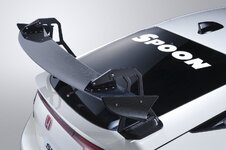
Spoon Crane Neck Wing Carbon Spoiler GT Wing Honda...
Started by
aycy
Exterior and Body
Honda Jazz/Fit GK Mugen body kit
Started by
jeff6126
Exterior and Body
Posts refresh every 5 minutes
Asking bout E-Manage
HI...I have a wira and it is fitted with 4G93P rojak...Using 1.8 head,1.8 engine block,1.6piston,1.5distributor + wiring,single cam ECU,single cam air flow censor...
My bro said that he is going to get e-manage for...
Piggyback EMS-1 by Works Engineering
http://www.works-engineering.com/Catalogue/210309_Catalog/Original/ENGINE%20MANAGEMENT%20EMS1_b.jpg
Anyone using Works EMS-1?? can give more info about this?? tuner?? software??
looking e6 original actuator or exchange with me
guys, mine actuator is over 1.3 bar i m looking for ori e6 act or someone wanna exchange with me !!
is e6 if u have the item for sale or exchange do let me know 0123709020 ken
Recent Posts
Recommendation: Turbocharger for 4B11 N.A engine
Started by
Mitevo7
Car Modification
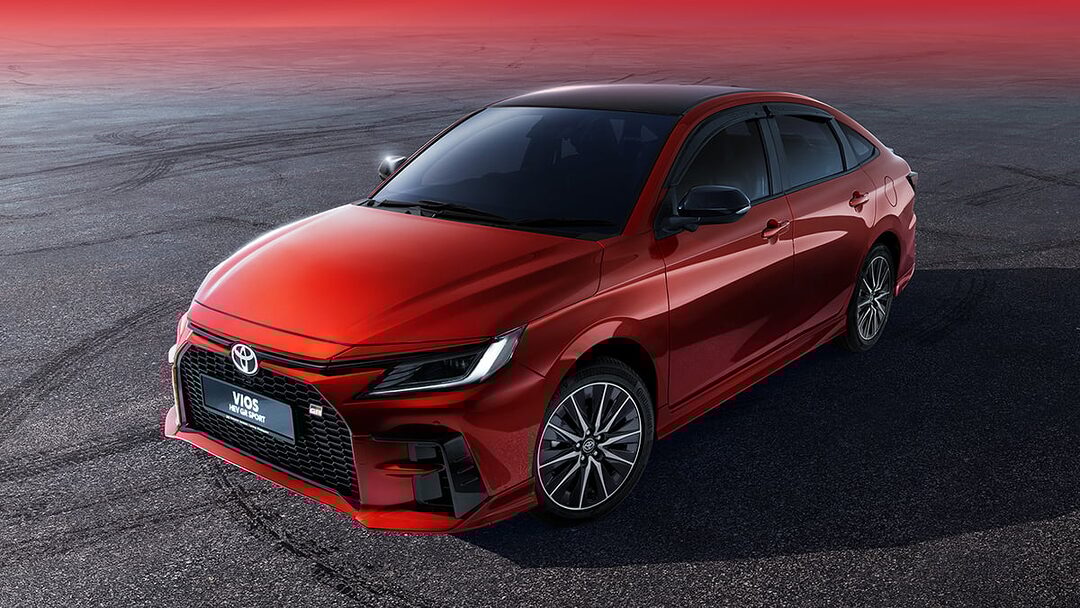
2026 Vios HEV launched with Local Battery Assembly - UMW Toyota Motor
Started by
The_Mechanic
News and Features
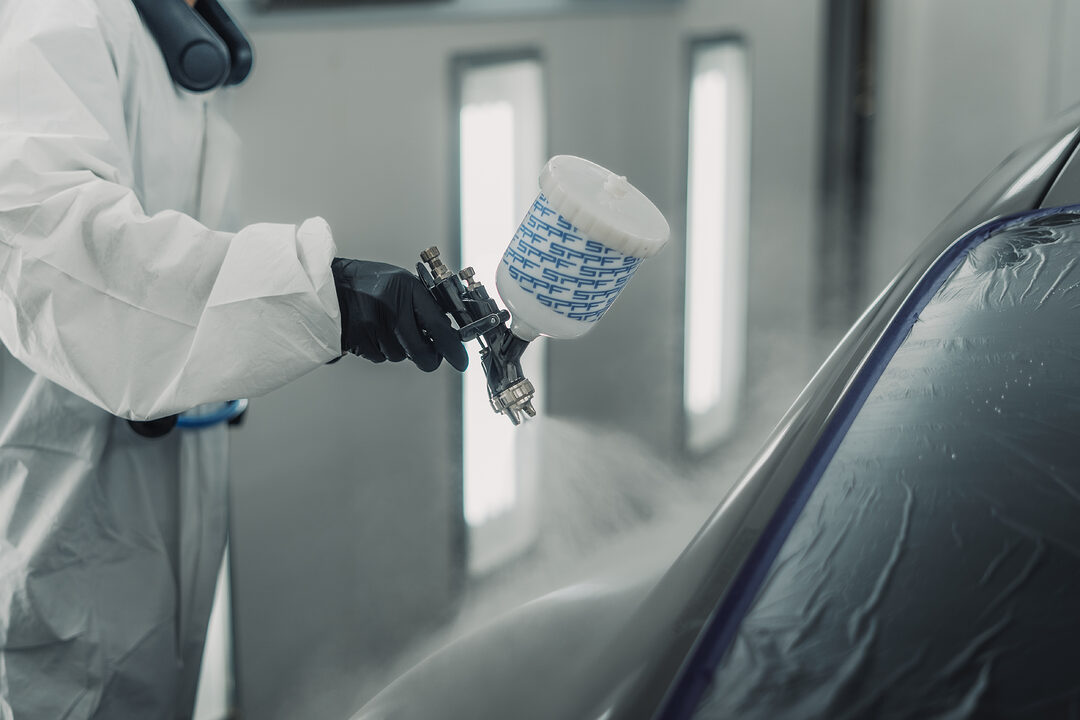
SPPF: The Future of Automotive Surface Protection - A Technical Overview
Started by
The_Mechanic
News and Features
Upping Wira 1.5 MMC performance
Started by
Nyfka
Car Modification
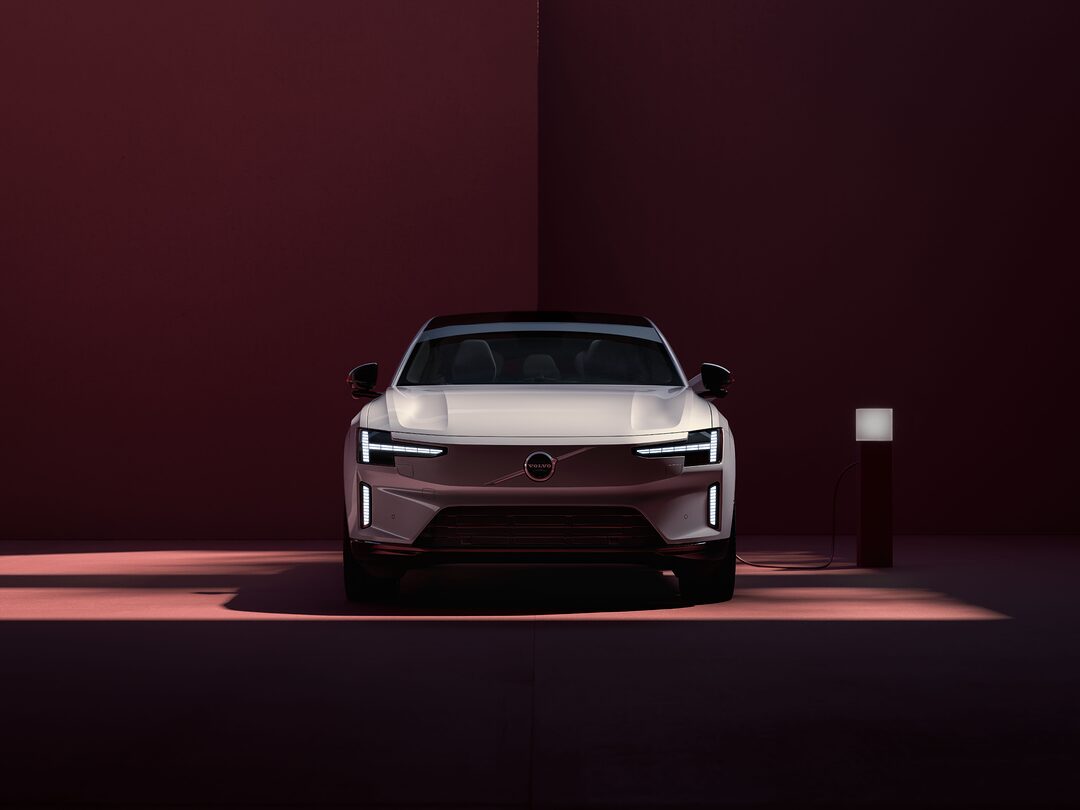
Volvo Malaysia Launches Locally Assembled ES90 Electric Sedan
Started by
The_Mechanic
News and Features
Search
Online now
Enjoying Zerotohundred?
Log-in
for an ad-less experience
Home
Forums
Car Brands
Car Manufacturers
Toyota
Toyota 4A-Engine