Menu
Home
Post Something
Forums
Current Activity
New posts
Search forums
What's new
New posts
Latest activity
News & Features
The Marketplace
Cars for Sale
Engine and Performance
Chassis and Wheels
Exterior and Body
Interior and Cockpit
ICE - In Car Entertainment
Car Shops and Services
Toys and Wares
All Other Stuff
Jobs and Vacancies
Looking For
Members
Log in
Register
What's new
Search
Search
Search titles only
By:
Current Activity
New posts
Search forums
Menu
Log in
Register
Reply to thread
See what others are reading now! Try Forums >
Current Activity
Home
Forums
Car Brands
Car Manufacturers
Mitsubishi
BHP about EVO I
JavaScript is disabled. For a better experience, please enable JavaScript in your browser before proceeding.
You are using an out of date browser. It may not display this or other websites correctly.
You should upgrade or use an
alternative browser
.
Message
<blockquote data-quote="limax" data-source="post: 970201" data-attributes="member: 2201"><p><strong>Horsepower and Torque Explained</strong></p><p></p><p>[font=arial, helvetica]<span style="font-size: 10px">Hope this helps.</span></p><p><span style="font-size: 10px"></span></p><p><span style="font-size: 10px"></span>[/font] </p><p></p><p>[font=arial, helvetica]<span style="font-size: 10px">by Jim Kerr </span></p><p><span style="font-size: 10px"></span></p><p><span style="font-size: 10px">Look at almost any automobile review and you will find horsepower and torque listed in the specs. For example, my "Quickmobile" has 200 horsepower at 9000 rpm and 57 ft lbs. torque at 2000 rpm. Is this vehicle really quick, or do numbers sometimes play tricks on us? Well, it has 200 horsepower. What does that mean? Horsepower is related to torque, and torque is turning force. Place a lever on the engine's crankshaft and measure the twisting force produced, and you have torque. Note that time is not a factor - torque can be constant over time. Horsepower, on the other hand, is the rate at which the torque is produced. </span></p><p><span style="font-size: 10px"></span></p><p><span style="font-size: 10px"><strong>Horsepower is a measurement of the engine's ability to do work</strong>. One horsepower can lift 33,000 pounds up one foot in one minute. Horsepower is measured over time. The more horsepower a vehicle has, the more mass it can move in the same amount of time, or it can move a fairly constant mass (the weight of the car) in less time. In simple terms, to get a vehicle accelerating quicker, we need to produce torque faster. </span></p><p><span style="font-size: 10px"></span></p><p><span style="font-size: 10px"></span></p><p><span style="font-size: 10px">There are many different ways of measuring the power of an engine. <strong>Brake horsepower</strong> is a common term and refers to the power measured at the crankshaft using a "prony" brake. A prony brake was a simple lever that was connected to the crankshaft with a brake. As the brake was applied, the lever would deflect and power was indicated. Nowadays, computers and strain gauges are used to measure the power. </span></p><p><span style="font-size: 10px"></span></p><p><span style="font-size: 10px">Rear wheel horsepower is just what it implies - horsepower applied by the rear wheels. A chassis dynamometer is used to measure the power transferred by the drive wheels onto the dynamometer's rollers. Brake horsepower is much lower than the horsepower specs provided by the manufacturers, because of all the power used by the transmission, final drive, and accessories. </span></p><p><span style="font-size: 10px"></span></p><p><span style="font-size: 10px">Gross horsepower is the power measured at the crankshaft without any engine accessories. This includes removing the air cleaner and ductwork, exhaust system, water pump drive, and any other devices driven by the engine. Prior to 1973, horsepower specifications were listed by the manufacturers as gross horsepower. After 1972, manufacturers provided net horsepower specifications. </span></p><p><span style="font-size: 10px"></span></p><p><span style="font-size: 10px"><strong>Net horsepower</strong> is also measured at the crankshaft before it goes into the transmission, but this time the engine is operated as it is installed in the vehicle, complete with accessories and ductwork. </span></p><p><span style="font-size: 10px"></span></p><p><span style="font-size: 10px">Occasionally, usually when reading overseas vehicle information, I find reference to taxable horsepower. Taxable horsepower is a simple mathematics calculation used to determine the taxes to be paid on the vehicle. It has very little to do with actual horsepower because it doesn't factor in key elements like compression ratios, cylinder head design, and camshaft specifications. To calculate taxable horsepower multiply the cylinder bore x cylinder bore x number of cylinders x 0.4, and don't forget to pay the tax! </span></p><p><span style="font-size: 10px"></span></p><p><span style="font-size: 10px">Many engineering documents and European manufacturers list engine power in Kilowatts. We more commonly use kilowatts to measure electrical power, but it is easy to convert from kilowatts to horsepower. <strong>One kilowatt is equal to 1.341 horsepower</strong>. While you are converting, you can also change torque measured in <strong>Newton metres (Nm)</strong> to ft lbs. by multiplying the Nm by 0.737561. </span></p><p><span style="font-size: 10px"></span></p><p><span style="font-size: 10px">There are other measurements of horsepower. It can be converted to British thermal units (BTU) or it can be listed in PS. <strong>PS is short for Pferdestarke</strong>, the term for metric horsepower. Don't ask - I haven't seen it used anywhere either, but if you want to dazzle your friends, <strong>one horsepower is equal to 1.0139 PS</strong>. </span></p><p><span style="font-size: 10px"></span></p><p><span style="font-size: 10px">So back to my Quickmobile. It really isn't very quick. With only 57 ft lbs. of torque, there isn't a lot of twist to turn the wheels. Sure, it has 200 hp, but it comes at a high 9000 rpm so it isn't very useful for normal driving or accelerating from a stop. </span></p><p><span style="font-size: 10px"></span></p><p><span style="font-size: 10px">To achieve good performance, operate the engine at its peak torque, and the lower the rpm this occurs, the stronger it will pull from a stop. I see too many "hot-rodded" engines where all they go after is maximum horsepower at high rpm. If you have a light vehicle, steep axle gearing, and are willing to constantly rev the engine high, then high horsepower numbers will make you go fast. Great for racing. </span></p><p><span style="font-size: 10px"></span></p><p><span style="font-size: 10px">For most of use however, it is better to have an engine with higher torque ratings and the lower or broader the rpm range it achieves it the better. Torque is what gets your vehicle moving. For everyday driving, I would pick a vehicle with high torque ratings at low rpm over a high horsepower, high rpm one any time. Want the best of both? Then consider vehicle with a supercharged or turbocharged engine. By packing more air into the engine, torque is increased dramatically, but the engine can still be built for high rpm operation. Who says you can't have your cake and eat it too. Unfortunately, cake costs money, and so do superchargers and <strong>turbo's.</strong> There is always a catch. </span></p><p><span style="font-size: 10px"></span></p><p><span style="font-size: 10px"></span></p><p><span style="font-size: 10px">So, those are the same things with difference terms.</span></p><p><span style="font-size: 10px"></span></p><p><span style="font-size: 10px">Taraa</span></p><p><span style="font-size: 10px"></span>[/font]</p></blockquote><p></p>
[QUOTE="limax, post: 970201, member: 2201"] [b]Horsepower and Torque Explained[/b] [font=arial, helvetica][size=2]Hope this helps. [/size][/font] [font=arial, helvetica][size=2]by Jim Kerr Look at almost any automobile review and you will find horsepower and torque listed in the specs. For example, my "Quickmobile" has 200 horsepower at 9000 rpm and 57 ft lbs. torque at 2000 rpm. Is this vehicle really quick, or do numbers sometimes play tricks on us? Well, it has 200 horsepower. What does that mean? Horsepower is related to torque, and torque is turning force. Place a lever on the engine's crankshaft and measure the twisting force produced, and you have torque. Note that time is not a factor - torque can be constant over time. Horsepower, on the other hand, is the rate at which the torque is produced. [b]Horsepower is a measurement of the engine's ability to do work[/b]. One horsepower can lift 33,000 pounds up one foot in one minute. Horsepower is measured over time. The more horsepower a vehicle has, the more mass it can move in the same amount of time, or it can move a fairly constant mass (the weight of the car) in less time. In simple terms, to get a vehicle accelerating quicker, we need to produce torque faster. There are many different ways of measuring the power of an engine. [b]Brake horsepower[/b] is a common term and refers to the power measured at the crankshaft using a "prony" brake. A prony brake was a simple lever that was connected to the crankshaft with a brake. As the brake was applied, the lever would deflect and power was indicated. Nowadays, computers and strain gauges are used to measure the power. Rear wheel horsepower is just what it implies - horsepower applied by the rear wheels. A chassis dynamometer is used to measure the power transferred by the drive wheels onto the dynamometer's rollers. Brake horsepower is much lower than the horsepower specs provided by the manufacturers, because of all the power used by the transmission, final drive, and accessories. Gross horsepower is the power measured at the crankshaft without any engine accessories. This includes removing the air cleaner and ductwork, exhaust system, water pump drive, and any other devices driven by the engine. Prior to 1973, horsepower specifications were listed by the manufacturers as gross horsepower. After 1972, manufacturers provided net horsepower specifications. [b]Net horsepower[/b] is also measured at the crankshaft before it goes into the transmission, but this time the engine is operated as it is installed in the vehicle, complete with accessories and ductwork. Occasionally, usually when reading overseas vehicle information, I find reference to taxable horsepower. Taxable horsepower is a simple mathematics calculation used to determine the taxes to be paid on the vehicle. It has very little to do with actual horsepower because it doesn't factor in key elements like compression ratios, cylinder head design, and camshaft specifications. To calculate taxable horsepower multiply the cylinder bore x cylinder bore x number of cylinders x 0.4, and don't forget to pay the tax! Many engineering documents and European manufacturers list engine power in Kilowatts. We more commonly use kilowatts to measure electrical power, but it is easy to convert from kilowatts to horsepower. [b]One kilowatt is equal to 1.341 horsepower[/b]. While you are converting, you can also change torque measured in [b]Newton metres (Nm)[/b] to ft lbs. by multiplying the Nm by 0.737561. There are other measurements of horsepower. It can be converted to British thermal units (BTU) or it can be listed in PS. [b]PS is short for Pferdestarke[/b], the term for metric horsepower. Don't ask - I haven't seen it used anywhere either, but if you want to dazzle your friends, [b]one horsepower is equal to 1.0139 PS[/b]. So back to my Quickmobile. It really isn't very quick. With only 57 ft lbs. of torque, there isn't a lot of twist to turn the wheels. Sure, it has 200 hp, but it comes at a high 9000 rpm so it isn't very useful for normal driving or accelerating from a stop. To achieve good performance, operate the engine at its peak torque, and the lower the rpm this occurs, the stronger it will pull from a stop. I see too many "hot-rodded" engines where all they go after is maximum horsepower at high rpm. If you have a light vehicle, steep axle gearing, and are willing to constantly rev the engine high, then high horsepower numbers will make you go fast. Great for racing. For most of use however, it is better to have an engine with higher torque ratings and the lower or broader the rpm range it achieves it the better. Torque is what gets your vehicle moving. For everyday driving, I would pick a vehicle with high torque ratings at low rpm over a high horsepower, high rpm one any time. Want the best of both? Then consider vehicle with a supercharged or turbocharged engine. By packing more air into the engine, torque is increased dramatically, but the engine can still be built for high rpm operation. Who says you can't have your cake and eat it too. Unfortunately, cake costs money, and so do superchargers and [b]turbo's.[/b] There is always a catch. So, those are the same things with difference terms. Taraa [/size][/font] [/QUOTE]
Insert quotes…
Verification
Post reply
The Marketplace Latest
MITSUBISHI / FE658 (RB/BK S2S)
Started by
PIstonHeads
Chassis and Wheels
Perodua Alza gear up body kit
Started by
jeff6126
Exterior and Body
brake caliper spray
Started by
jeff6126
Exterior and Body
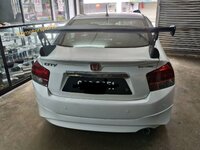
Honda city Mugen gtwing spoiler
Started by
jeff6126
Exterior and Body
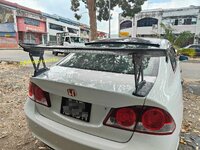
Honda Civic FD JSracing GTwing spoiler
Started by
jeff6126
Exterior and Body
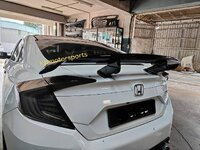
Honda civic FC varis GTwing spoiler
Started by
jeff6126
Exterior and Body
JSracing GTwing spoiler
Started by
jeff6126
Exterior and Body
Proton saga drive68 bodykit
Started by
jeff6126
Exterior and Body
Perodua Bezza projectR body kit
Started by
jeff6126
Exterior and Body
Honda city gm6 drive68 body kit
Started by
jeff6126
Exterior and Body
Posts refresh every 5 minutes
workshops for Z
hi all...my 350z tempreture going up high after started for 5-10 mins is there any workshops recommended? thank you...
Evo twin pot calipers. What Pads?
Guys can u all help me out.
I'm looking for a good set of brake pads to use on evo twin pot calipers.
Any recomendation? need something that can stand hard braking and not have brake fade at high temps...
Changing Wira 1.5 front disc brakes
I haven't dismantled the front disc brakes before, so I'd just like to ask about this in case anyone's seen a mechanic do it.
The front disc brake has this "plate" behind the rotor, right? The plate's folded edges...
Recent Posts
Recommendation: Turbocharger for 4B11 N.A engine
Started by
Mitevo7
Car Modification
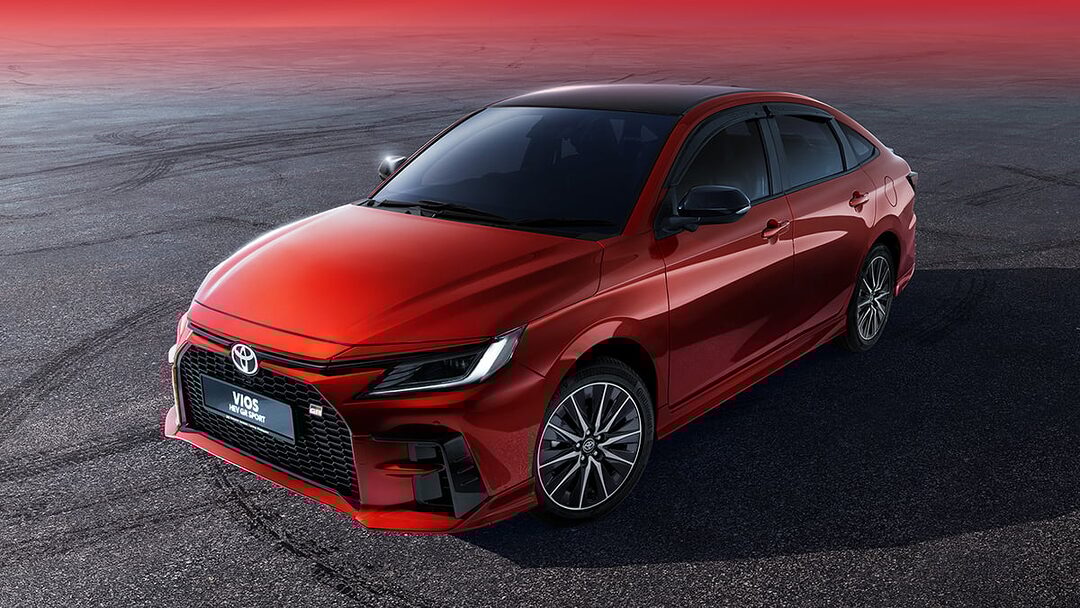
2026 Vios HEV launched with Local Battery Assembly - UMW Toyota Motor
Started by
The_Mechanic
News and Features
SPPF: The Future of Automotive Surface Protection - A Technical Overview
Started by
The_Mechanic
News and Features
Upping Wira 1.5 MMC performance
Started by
Nyfka
Car Modification
Volvo Malaysia Launches Locally Assembled ES90 Electric Sedan
Started by
The_Mechanic
News and Features
Search
Online now
Enjoying Zerotohundred?
Log-in
for an ad-less experience
Home
Forums
Car Brands
Car Manufacturers
Mitsubishi
BHP about EVO I