Menu
Home
Post Something
Forums
Current Activity
New posts
Search forums
What's new
New posts
Latest activity
News & Features
The Marketplace
Cars for Sale
Engine and Performance
Chassis and Wheels
Exterior and Body
Interior and Cockpit
ICE - In Car Entertainment
Car Shops and Services
Toys and Wares
All Other Stuff
Jobs and Vacancies
Looking For
Members
Log in
Register
What's new
Search
Search
Search titles only
By:
Current Activity
New posts
Search forums
Menu
Log in
Register
Reply to thread
See what others are reading now! Try Forums >
Current Activity
Home
Forums
Main Forums
Car Talk
Car Modification
turbo kit
JavaScript is disabled. For a better experience, please enable JavaScript in your browser before proceeding.
You are using an out of date browser. It may not display this or other websites correctly.
You should upgrade or use an
alternative browser
.
Message
<blockquote data-quote="ierulink" data-source="post: 511552" data-attributes="member: 8609"><p>Tech Articles from http://www.sporttruck.com/techarticles/1436/</p><p></p><p>Supercharger Basics</p><p>Nothing looks more radical and shouts "bad to the bone" louder than a monster 6-71 supercharger sticking out of the hood of a Pro Street pickup. And there’s no doubt that superchargers are cool, but...</p><p></p><p>By Kevin Wilson</p><p>Photography: The Sport Truck Files</p><p></p><p>Nothing looks more radical and shouts "bad to the bone" louder than a monster 6-71 supercharger sticking out of the hood of a Pro Street pickup. And there's no doubt that superchargers are cool, but the science of forced air induction goes way beyond just looking cool. Basic knowledge of the principles and practices of supercharging will go a long way in helping you select the right blower for the job.</p><p></p><p>How It Works</p><p>To understand how a supercharger works, you have to think of the engine as a giant air pump. The motor’s four-stroke cycle first allows the pistons to draw air in through the carburetor, the intake manifold and the intake valves. The air is then compressed by the piston while all the valves are closed and ignited by the spark plug. The resulting explosion forces the piston down in the power stroke. The final stage of the four-stroke cycle is when the piston comes back up and forces the spent gases out of the exhaust valve.</p><p></p><p>In theory, a denser air charge (also mixed with fuel) will create a more powerful combustion explosion inside the cylinder, thus creating more downforce on the piston which translates into horsepower. Increasing this air charge is where the supercharger comes in. The mechanically driven supercharger force-feeds the combustion chamber a denser air/fuel mixture. This mechanically increases the compression ratio by forcing a boosted (pressurized) air/fuel mixture in the combustion chamber. The denser charge will increase dynamic cylinder pressure upon ignition to create more power.</p><p></p><p>Type A & B Personalities</p><p>Mechanically driven superchargers can be classified into two distinct types: basic air pumps and true compressors. While that cool-looking monster 6-71 may look like a giant air compressor, it’s actually just an air pump. The 6-71 is a classic Roots-type blower which dates back to the 1880s when the Roots brothers designed it as an air conveyor for mine shafts. General Motors later adopted the design in the 1930s as a supercharger for its GMC diesel engines, using it mainly to pump out exhaust gases. In general, Roots blowers have a two- or three-lobe rotor design, depending on the size of the case. They can move mass quantities of air which stacks up inside the intake manifold to create positive pressure, or boost. Not only do they look cool sticking through the hood, but they have higher discharge temperatures than other designs.</p><p></p><p>The second type of supercharger utilizes a more efficient design which actually compresses the air as it's drawn through the unit. Some examples of centrifugal blowers are those from Paxton, Vortech Engineering and, to some degree since the air is compressed inside the unit, the Whipple Industries screw-type supercharger. Turbos also fall into this category.</p><p></p><p>Centrifugal superchargers are basically belt-driven turbochargers (as opposed to exhaust-gas driven), with inlet air drawn to the center of the blower where the high impeller speed converts this air velocity into pressure. The high turbine speeds are generated by internally overdriving the input shaft which is also overdriven by the external drive pulley. Turbine speeds can approach 40,000 to 50,000 rpm on these types of blowers, with normal boost in the 6 to 10 pound range for street engines.</p><p></p><p>One of the most popular blowers for late-model Chevy street trucks is the Whipplecharger from Whipple Industries. The bolt-on blower is basically a twin-screw compressor that shares a case similar to a Roots-type supercharger. By design, it's an axial-flow supercharger that compresses air as it moves between the twin screws of the blower. The screw supercharger offers potential advantages over less efficient, non-compressor designs in that the outlet temperatures are normally lower.</p><p></p><p>No Free Rides</p><p>As with everything in life, nothing is free. All belt-driven superchargers need horsepower to run--sometimes as much as 20 percent of engine’s total. The good news is that the additional horsepower created by the blower will more than make up for power loss. The other concern with supercharging deals with the law of physics. High school physics taught us that when air is compressed, heat is created. The more efficiently a supercharger compresses air, the less heat added to the intake manifold. And we all know the cooler the intake charge, the denser the air and the more horsepower available.</p><p></p><p></p><p>Blower efficiency is measured by the discharge air temperature at a given pressure. For example, Blower A might have a discharge air temp of 180 degrees at 6 pounds of boost, while Blower B might have a discharge temp of 195 degrees. Blower speed also comes into play here. The higher the speed, the more heat generated. Supercharger manufacturers refer to a blower's efficiency in terms of adiabatic efficiency: how well it pressurizes air into an engine. For example, a Roots blower typically has an adiabatic efficiency of 50 percent, while a screw-type supercharger and centrifugal blowers can see up to 75 percent. Thus, higher boost levels do not necessarily mean more power. Intercoolers can lower intake temperatures by pushing the compressed air through a radiator-type device--but at the cost of boost pressure.</p><p></p><p>Other Considerations</p><p>Volumes have been written on the science of supercharging, and we’ve only hit the highlights here. Other considerations include the compression ratio of the engine, the cam profile, the spark timing and the exhaust upgrades--not to mention having room under the hood to add the blower in the first place.</p><p></p><p></p><p>Adding a supercharger to late-model-truck applications is a no-brainer since most manufacturers have taken the guesswork out of fuel augmentation under boost and spark timing management. Since the blower pressurizes the intake manifold and can make up for any minor design shortcomings, there's no need to port and polish the intake and heads on a relatively stock motor.</p><p></p><p>However, exhaust upgrades are a must since the additional air a supercharger pumps into the engine must exit quickly and efficiently. Consider smog-legal headers, a low-restriction catalytic converter and top-drawer cat-back exhaust system.</p><p></p><p>To reduce the chance of detonation (pinging), opt for a low-temperature thermostat (160 degrees) and consider a boost/retard ignition device such as one offered from Jacobs Electronics or MSD. This device will retard ignition timing as the boost pressure increases in order to prevent detonation. Also, once supercharged, plan on running the good gas: 92 octane or better to prevent detonation.</p><p></p><p>Supercharging is an easy bolt-on way to make big horsepower gains on a relatively stock engine, provided you do your homework and pick the right blower for the job.</p></blockquote><p></p>
[QUOTE="ierulink, post: 511552, member: 8609"] Tech Articles from http://www.sporttruck.com/techarticles/1436/ Supercharger Basics Nothing looks more radical and shouts "bad to the bone" louder than a monster 6-71 supercharger sticking out of the hood of a Pro Street pickup. And there’s no doubt that superchargers are cool, but... By Kevin Wilson Photography: The Sport Truck Files Nothing looks more radical and shouts "bad to the bone" louder than a monster 6-71 supercharger sticking out of the hood of a Pro Street pickup. And there's no doubt that superchargers are cool, but the science of forced air induction goes way beyond just looking cool. Basic knowledge of the principles and practices of supercharging will go a long way in helping you select the right blower for the job. How It Works To understand how a supercharger works, you have to think of the engine as a giant air pump. The motor’s four-stroke cycle first allows the pistons to draw air in through the carburetor, the intake manifold and the intake valves. The air is then compressed by the piston while all the valves are closed and ignited by the spark plug. The resulting explosion forces the piston down in the power stroke. The final stage of the four-stroke cycle is when the piston comes back up and forces the spent gases out of the exhaust valve. In theory, a denser air charge (also mixed with fuel) will create a more powerful combustion explosion inside the cylinder, thus creating more downforce on the piston which translates into horsepower. Increasing this air charge is where the supercharger comes in. The mechanically driven supercharger force-feeds the combustion chamber a denser air/fuel mixture. This mechanically increases the compression ratio by forcing a boosted (pressurized) air/fuel mixture in the combustion chamber. The denser charge will increase dynamic cylinder pressure upon ignition to create more power. Type A & B Personalities Mechanically driven superchargers can be classified into two distinct types: basic air pumps and true compressors. While that cool-looking monster 6-71 may look like a giant air compressor, it’s actually just an air pump. The 6-71 is a classic Roots-type blower which dates back to the 1880s when the Roots brothers designed it as an air conveyor for mine shafts. General Motors later adopted the design in the 1930s as a supercharger for its GMC diesel engines, using it mainly to pump out exhaust gases. In general, Roots blowers have a two- or three-lobe rotor design, depending on the size of the case. They can move mass quantities of air which stacks up inside the intake manifold to create positive pressure, or boost. Not only do they look cool sticking through the hood, but they have higher discharge temperatures than other designs. The second type of supercharger utilizes a more efficient design which actually compresses the air as it's drawn through the unit. Some examples of centrifugal blowers are those from Paxton, Vortech Engineering and, to some degree since the air is compressed inside the unit, the Whipple Industries screw-type supercharger. Turbos also fall into this category. Centrifugal superchargers are basically belt-driven turbochargers (as opposed to exhaust-gas driven), with inlet air drawn to the center of the blower where the high impeller speed converts this air velocity into pressure. The high turbine speeds are generated by internally overdriving the input shaft which is also overdriven by the external drive pulley. Turbine speeds can approach 40,000 to 50,000 rpm on these types of blowers, with normal boost in the 6 to 10 pound range for street engines. One of the most popular blowers for late-model Chevy street trucks is the Whipplecharger from Whipple Industries. The bolt-on blower is basically a twin-screw compressor that shares a case similar to a Roots-type supercharger. By design, it's an axial-flow supercharger that compresses air as it moves between the twin screws of the blower. The screw supercharger offers potential advantages over less efficient, non-compressor designs in that the outlet temperatures are normally lower. No Free Rides As with everything in life, nothing is free. All belt-driven superchargers need horsepower to run--sometimes as much as 20 percent of engine’s total. The good news is that the additional horsepower created by the blower will more than make up for power loss. The other concern with supercharging deals with the law of physics. High school physics taught us that when air is compressed, heat is created. The more efficiently a supercharger compresses air, the less heat added to the intake manifold. And we all know the cooler the intake charge, the denser the air and the more horsepower available. Blower efficiency is measured by the discharge air temperature at a given pressure. For example, Blower A might have a discharge air temp of 180 degrees at 6 pounds of boost, while Blower B might have a discharge temp of 195 degrees. Blower speed also comes into play here. The higher the speed, the more heat generated. Supercharger manufacturers refer to a blower's efficiency in terms of adiabatic efficiency: how well it pressurizes air into an engine. For example, a Roots blower typically has an adiabatic efficiency of 50 percent, while a screw-type supercharger and centrifugal blowers can see up to 75 percent. Thus, higher boost levels do not necessarily mean more power. Intercoolers can lower intake temperatures by pushing the compressed air through a radiator-type device--but at the cost of boost pressure. Other Considerations Volumes have been written on the science of supercharging, and we’ve only hit the highlights here. Other considerations include the compression ratio of the engine, the cam profile, the spark timing and the exhaust upgrades--not to mention having room under the hood to add the blower in the first place. Adding a supercharger to late-model-truck applications is a no-brainer since most manufacturers have taken the guesswork out of fuel augmentation under boost and spark timing management. Since the blower pressurizes the intake manifold and can make up for any minor design shortcomings, there's no need to port and polish the intake and heads on a relatively stock motor. However, exhaust upgrades are a must since the additional air a supercharger pumps into the engine must exit quickly and efficiently. Consider smog-legal headers, a low-restriction catalytic converter and top-drawer cat-back exhaust system. To reduce the chance of detonation (pinging), opt for a low-temperature thermostat (160 degrees) and consider a boost/retard ignition device such as one offered from Jacobs Electronics or MSD. This device will retard ignition timing as the boost pressure increases in order to prevent detonation. Also, once supercharged, plan on running the good gas: 92 octane or better to prevent detonation. Supercharging is an easy bolt-on way to make big horsepower gains on a relatively stock engine, provided you do your homework and pick the right blower for the job. [/QUOTE]
Insert quotes…
Verification
Post reply
The Marketplace Latest
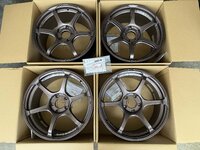
original WedsSport SA70 18x9jj offset +32 5H pcd...
Started by
david tao
Chassis and Wheels
BRAND NEW original rare Yokohama ADVAN Racing RG4...
Started by
david tao
Chassis and Wheels
original rare Yokohama ADVAN Racing RZ2 RZii...
Started by
david tao
Chassis and Wheels
original rare Yokohama ADVAN Racing RG 16x7jj...
Started by
david tao
Chassis and Wheels
original rare Yokohama ADVAN Racing RG 16x7jj...
Started by
david tao
Chassis and Wheels
original rare Rays Volk Racing TE37SL 18x9jj offset...
Started by
david tao
Chassis and Wheels
Spoon Sw388 18x10J+40 5H120 Rim Rims Civic FL5 Type R
Started by
aycy
Chassis and Wheels
Spoon Crane Neck Wing Carbon Spoiler GT Wing Honda...
Started by
aycy
Exterior and Body
Honda Jazz/Fit GK Mugen body kit
Started by
jeff6126
Exterior and Body
original TWS Taneisya P1 racing 17x8.5jj offset +28...
Started by
david tao
Chassis and Wheels
Posts refresh every 5 minutes
WTA where i can find subaru grb sti bodypart???
hi..
i wanna ask,where i can find subaru grb (hatch) sti bodypart such as:
right side body panel
right front door
right rear door
ringht rear mirror
rear door
rear glass
and other parts
i think better i get a rear...
mounting question
my engine vibrate quite a lot. i suspect it's maybe because of the engine mounting or the gearbox mounting.
i wonder any of u guys have change the mounting and how much will it cost involved ? how many parts change...
HKS Power Writer
Hmm.. I have a few questions as to some things that I've heard.
One guy claims that his friend of a friend has gotten hold of the Power Writer software. And this is not the first time I'm hearing copies of power...
Recent Posts
2026 Vios HEV launched with Local Battery Assembly - UMW Toyota Motor
Started by
The_Mechanic
News and Features
SPPF: The Future of Automotive Surface Protection - A Technical Overview
Started by
The_Mechanic
News and Features
Upping Wira 1.5 MMC performance
Started by
Nyfka
Car Modification
Volvo Malaysia Launches Locally Assembled ES90 Electric Sedan
Started by
The_Mechanic
News and Features
AMPANG mari!!ZTH member
Started by
shahaff_07
Groups and Meets
Search
Online now
bulong
Enjoying Zerotohundred?
Log-in
for an ad-less experience
Home
Forums
Main Forums
Car Talk
Car Modification
turbo kit