

 Lets face it, the world is a much filthier place than it was 20 years ago and everyone is to blame though us motorist get most of the rap. I don’t quite understand that though considering that a 747 flying across the Atlantic emits much more pollution than an entire season of Formula 1 combined. I’m not playing the blame game here and I’m also not suggesting we do, I’m advocating we do something about this catastrophe. Sure the actual time to do that has long passed but better late than never.

So what does Zerotohundred have to do with all this? Well actually, we have everything to do with it. We can’t just sit around and watch everybody mess up our lovely planet and have legislators ban cars, our bread and butter. We might just find ourselves in a i-Robot kind of situation where cars drive us instead of us driving cars. What are we going to write about in the future? How “programmable” a car is? To avoid such a nightmare, we went out and tested one of the most prominent vehicles in Hybrid technology, the Honda Civic Hybrid in the hope that we can put across the different technologies that are available for the same purpose with less of a carbon foot print.

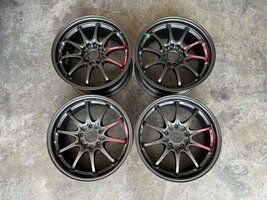
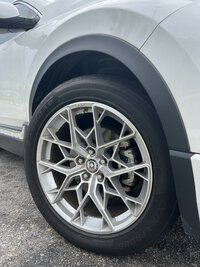
From the outside, it looks like every other Civic on the road, except for its distinctive colour and futuristic wheels, there is nothing that hints about it running on Hybrid technology, except for the badge of course. Get in, and again the similarities are obvious. The tanned leather interior is one that is again unique to the Hybrid but besides that, the only give away is the rev meter cluster with its Integrated Motor Assist (IMA) and battery charge level indicator. The interior is really a great place to be in just as it is with any other Civic, but the one thing that separates the two is the drive.

Driving the Hybrid around really does make you feel good about yourself because not only are you being kind to your own wallet, you are being kind to everyone and everything around you as well, even the air. This is because the Civic Hybrid meets a very stringent US rating called Advanced Technology Zero Partial Emission Vehicle (AT-PZEV). To achieve AT-PZEV status, a vehicle must be a Super-Ultra-Low-Emission Vehicle (SULEV) with zero-evaporative emissions. To achieve that every 2008 Civic Hybrid has a plastic-resin fuel tank that helps control evaporative emissions, keeping them to near-zero levels.

In my travels with the Civic Hybrid, I covered more than 800km from Port Dickson to Ipoh to Penang to Cameron Highlands and then back to KL. More than enough time to get to know the Hybrid intimately, and that’s what I did. I realized that for a 1.3liter engine, it was very zippy and was always eager to get it going. It’s no Type-R, but a simple technology called Integrated Motor Assist couples a 1.3liter, 4-cyliner, 8-valve i-Vtec petrol engine with an electric motor to get the job done.

The IMA provides additional power via a permanent-magnet electric motor that is mounted between the engine and transmission and when coupled with the engine, they both produce a total of 110hp@6000rpm. The motor also functions as a generator for the IMA system during deceleration, storing energy that it can later use to help with acceleration.

Another prominent feature in the Civic Hybrid is called “idle-stop”, it temporarily turns off the engine to save fuel and minimise emissions. It’s pretty trippy at first if you’re not aware of it, but a green auto-stop light on the instrument display quickly helps you realize that it’s a feature built into the car, and that a bad news phone call to Honda Malaysia is not required. The engine restarts as soon as the brake pedal is released and the entire circle happens again the next time you’re at the lights.

The Civic Hybrid is also all about fuel economy and is at its best in city driving. To attain absolute fuel mileage, Honda commissions a variety of technologies, one of them being something we are quite familiar with, continuous variable transmission (CVT). Similar to an auto transmission, CVT replaces the gearing in traditional transmissions with a metal push belt running between a pair of variable-width pulley. When combined with the Drive-by-Wire throttle system, the CVT provides increased fuel economy and acceleration as it adjusts itself to provide the most efficient drive ratio depending on torque load.

I recorded fuel consumption at 12.9 to 13.5km/l at highway speeds but in city conditions, an impressive 16.4 to 17.5km/l was achieved. I was told that in extreme traffic conditions, consumption can be as low 24.5km/l. Sounds like the answer to your prayers doesn’t it? When asked about the system, Honda explained, “When the Hybrid is cruising at highway speeds, the 1.3L i-VTEC petrol engine supplies the drive. The IMA assists only when overtaking or a burst of acceleration is required in these highway conditions. The IMA is at it’s peak and supplies the drive during traffic conditions of below 40 km/h and during vehicle start up and when the car is completely stopped, e.g. at traffic lights.”
While writing this I found myself thinking, why is it that such a system has not been encouraged and implemented widely here in Malaysia? Shouldn’t every car be able to do this? It would definitely make the world a much better, greener, healthier place for everybody. Well, the truth is, the technology is still in its infancy and that makes it expensive to produce and implemented en masse. In countries such as the United States and some parts of Europe, Hybrid technology is widely encouraged. Celebrities endorse it and governments have tax break incentives for owners of Hybrid vehicles.

That’s exactly what needs to be done here as well, to encourage people to save fuel and save the environment, tax break incentives and lower vehicle tax for Hybrid vehicles should be implemented. For your information, the Civic Hybrid currently retails for slightly above RM170,000. It saves you petrol, saves the environment and helps people live healthier lives, should we really be made to pay more for going green?




 :slug::slug: